

Understanding Binary Masks and Their Uses
Explore binary masks and how they function 🖥️. Learn about their types, creation methods, and practical tips for image processing and computer vision tasks in South Africa.
Edited By
James Holden
Binary and octal are two common number systems in computing, each serving specific purposes. While binary uses just two digits (0 and 1), octal operates on eight digits (0 to 7). Converting from binary to octal simplifies the representation of long binary strings, making them easier to read and manage.
This is especially handy for traders and financial analysts working with digital tools or algorithmic trading, where binary data often underpins transaction processing or automated decision-making. Octal numbers condense binary information into a shorter form without losing detail, helping users interpret system outputs or debug code quickly.
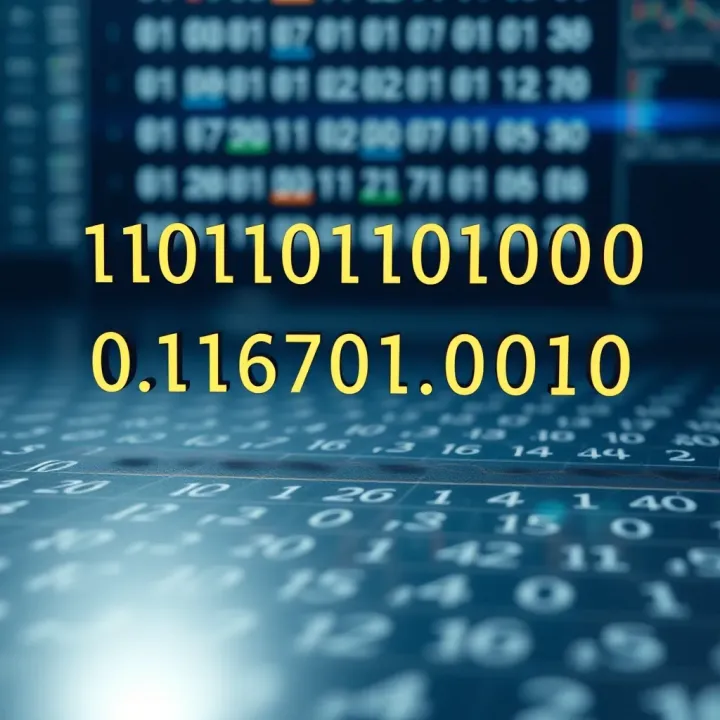
Simplifies binary data: Groups of three binary digits correspond exactly to one octal digit.
Eases human interpretation: Octal is less error-prone for reading and writing than long binary strings.
Useful in computing: Some low-level systems and electronics use octal as a shorthand, bridging hardware operations and software.
Group binary digits in sets of three: Starting from the right (least significant bit), split the binary number into groups of three. If the leftmost group has fewer than three digits, add zeros at the start.
Convert each trio to octal: Each set of three binary digits equates to a single octal digit (0–7).
Combine the octal digits: Write them together in the same order to form the octal number.
For example, the binary number 1011101 groups as 001 011 101. These correspond to octal digits 1 3 5, resulting in an octal number 135.
Converting binary to octal is a quick way to reduce complex binary sequences into manageable figures, which is critical in areas like embedded systems programming or financial software debugging.
Many programming languages have built-in functions for conversions, saving time and reducing errors.
Online binary-to-octal converters and calculators can help verify results.
When handling financial datasets coded in binary, always double-check for leading zeros to avoid misinterpretation.
Understanding this conversion adds clarity when dealing with digital encoding in trading platforms or electronic data feeds. It’s a straightforward trick that can improve your technical fluency without much fuss.
Understanding number systems is foundational when dealing with digital data. Each system follows its own base, or radix, determining how numbers are composed and interpreted. This section sheds light on why grasping binary and octal systems matters, especially when converting between the two.
Definition and purpose of binary numbers: Binary numbers use only two digits, 0 and 1, reflecting the on/off states in digital circuits. This system underpins computing because electronic devices, like your smartphone or laptop, represent data internally as binary patterns. Take a simple example: the binary number 1011 represents the decimal number 11. Since computers speak in binary, understanding it helps you make sense of how software and hardware interact.
What octal numbers represent: Octal numbers are base-8, using digits from 0 to 7. They serve as a shorthand for binary groups, making long binary strings easier to read and manage. Instead of handling a long sequence of ones and zeroes, octal condenses these into fewer digits. For instance, an octal number 17 corresponds to binary 001 111, or decimal 15. In practical terms, octal made life simpler in earlier computing days and still shows up in permission settings on systems like Unix.
Key differences between binary and octal: The most obvious difference is the base: two for binary, eight for octal. Binary digits (bits) represent granular data states, while octal groups these bits into clusters of three, providing clearer readability without losing value. Where binary streams can become overwhelming, octal offers neat chunks that programmers and engineers can check easily. For example, binary 110101 converts neatly to octal 65, reducing error chances and speeding up interpretation.
Simplifying binary numbers: Binary sequences can quickly get unwieldy, especially for larger values. Converting to octal trims down the length considerably—grouping every three bits into one octal digit. This simplification helps when scanning memory dumps or debugging low-level code, making it easier to spot patterns. The process is practical when you want to translate raw binary data into a format that humans find manageable without losing precision.
Usage in digital and electronic applications: In electronics, especially embedded systems and hardware design, efficient representation matters. Octal allows technicians to write addresses, instruction sets, or binary-coded values succinctly. Consider configuring network protocols or memory addresses—using octal reduces clutter and minimises mistakes in inputs compared to long binary strings. Even in South African educational settings teaching digital electronics, both systems feature prominently to build foundational knowledge.
Benefits in computing and programming: Programmers often rely on octal when dealing with system permissions or legacy code that references octal values. For instance, setting a file permission of 755 on Linux denotes specific read, write, and execute rights using octal notation. Converting binary accurately into octal ensures these settings are interpreted correctly by the operating system. Thus, mastering this conversion aids precision and reduces errors in programming related to hardware interfaces or system configuration.
Knowing how to convert binary numbers into octal helps bridge the gap between machine language and human understanding, making data easier to handle while preserving exact values.
Understanding these basics equips you with the tools to work confidently with digital data, especially in areas relevant to computing, programming, and electronics that are central to South Africa's growing tech landscape.

Understanding the process of converting binary numbers to octal is essential, especially for traders and financial analysts dealing with digital systems or working closely with programmers or data systems. This step-by-step guide breaks down the conversion, allowing you to simplify binary figures into a more manageable octal form. This not only aids comprehension but improves efficiency when working across computing platforms where octal notation often plays a role.
Binary digits are grouped by three because each set of three binary digits directly maps to one octal digit. This works because octal is base eight and binary is base two; three binary digits can represent 2³, which equals 8, making the conversion straightforward.
For instance, the binary number 110 101 011 can be broken into groups: 110, 101, and 011. Each group corresponds to an octal digit — simplifying otherwise lengthy binary numbers.
When the total binary digits aren’t divisible by three, you pad the leftmost group with zeros to complete the triplet. For example, 10110 becomes 010 110 by adding one zero in front. This doesn't change the number's value but ensures correct grouping.
Once grouped, convert each three-digit binary cluster to its octal equivalent by calculating its decimal value directly, which will range from 0 to 7. Take 110, which is 1×4 + 1×2 + 0×1 = 6 in decimal, representing the octal digit 6.
This conversion method is practical for financial software or electronic systems analysts who might encounter binary-coded inputs requiring translation to octal for interfacing with certain legacy systems or protocols.
Take the binary number 101011:
Step 1: Group digits as 101 011
Step 2: Convert each to decimal (octal) — 101 is 5, 011 is 3
Result: The octal number is 53
Another example: binary 11101
Pad left: 011 101
Convert groups — 011 is 3, 101 is 5
Octal result: 35
Grouping and conversion give you a quick way to interpret binary data in octal, which can be easier to read and aligns with many technical systems used in South African industries and beyond.
In finance and tech partnerships, gaining fluency in these steps can streamline communications and ensure data integrity when exchanging digital information across different bases.
Having the right tools and resources can simplify binary to octal conversion, especially when working with large data sets or in a fast-paced environment like finance or IT. While understanding the manual process is essential, digital tools offer speed and accuracy that often outstrip human calculation, saving you time and reducing errors.
When to calculate by hand: Manual calculation comes in handy when you want to grasp the basics of conversion or double-check results. Traders or analysts learning the fundamentals often benefit from doing this by hand, as it cements understanding of how binary data maps to octal form. For instance, a financial analyst calculating binary flags relating to system permissions might convert smaller bit groups manually to ensure correctness.
Manual conversion is also useful when digital tools are unavailable, such as during training sessions or while working offline. It's good practice to try manual conversion occasionally to avoid total dependence on calculators. However, in complex scenarios involving lengthy binary numbers, this method can become tedious and prone to mistakes.
Advantages of using a calculator or converter: Digital converters drastically speed up the process. With calculators or software, you can convert long binary strings into octal within seconds, which is vital when dealing with large datasets or time-sensitive decisions. For example, a software engineer debugging assembly code can quickly check octal values to verify memory addresses.
Besides speed, these tools reduce human error, especially in grouping binary digits correctly or interpreting results. Many online converters also provide step-by-step explanations, helping users learn while they work. Given the rising data complexity in South Africa's tech and financial sectors, relying on accurate digital tools is not just practical but often necessary.
Criteria for selecting tools: When choosing a binary to octal converter, accuracy should be your top priority. The tool must correctly group binary digits and handle edge cases like leading zeros or non-standard input lengths. Usability matters too—the interface should be straightforward so you can use it without a steep learning curve.
Security and privacy should not be overlooked, especially if you're processing sensitive financial or technical data. Tools that operate offline or securely on your device reduce risks associated with data transmission over the internet.
Examples of reliable converters available: Several converters have garnered positive feedback for their reliability and ease of use. Notable options include the Binary to Octal calculator on OmniCalculator, renowned for clear explanations and user-friendly design, and MathIsFun, which offers interactive examples that outline each conversion step.
Additionally, software like Wolfram Alpha or programming IDEs with built-in conversion functions can be valuable resources for professionals needing quick, precise results. South African users might also benefit from resources provided by local educational platforms or tech forums, where tools are tailored to regional learning needs and industry standards.
Choosing the right conversion tool can save you hours and improve accuracy, crucial in decision environments requiring rapid and reliable data interpretation.
Understanding common pitfalls in binary to octal conversion helps prevent errors that can cascade into bigger problems, especially in computing and technical environments where accuracy is key. Mistakes like misgrouping binary digits or misinterpreting octal values can lead to incorrect data representation, affecting everything from software development to system configurations. Spotting these issues early not only saves time but ensures the integrity of your work.
When converting binary to octal, grouping digits in threes starting from the right is essential because each octal digit corresponds to exactly three binary digits. If you group incorrectly—say, starting from the left or in pairs instead of triplets—the octal output won’t match the original binary number. For example, converting the binary number 101010 into wrongly grouped sets like 10 101 0 alters the value; the correct grouping would be 001 010 100 yielding a different octal number.
In practice, always pad the binary number with leading zeros if its length isn’t divisible by three. This ensures orderly grouping and maintains numerical integrity. To check your grouping, write the binary number clearly and mark groups explicitly. You might even highlight each group in a different colour or separate with spaces.
Octal digits include only 0 through 7. If you see digits outside this range after conversion, there’s likely a mistake. This can happen when binary groups aren’t handled correctly or when decimal or hexadecimal values get mixed up. Always verify that each octal digit falls within the accepted range. For instance, a digit '9' in what’s supposed to be an octal number clearly signals an error.
When reading or writing converted octal values, be mindful to reflect the correct format. Octal numbers sometimes include a leading zero (e.g. 075) to differentiate them from decimal numbers in programming contexts. Omitting or misplacing this can cause misinterpretation by software or colleagues. Writing the number with the appropriate prefixes or clearly labelling it helps avoid confusion.
Taking the time to correctly group binary digits and accurately interpret octal values ensures your conversions are trustworthy and that your data stays consistent across systems. This is a straightforward way to sidestep common mistakes and make your work more reliable in the fast-paced tech and financial environments found in South Africa and beyond.
Always start grouping binary digits from the right in sets of three.
Pad with leading zeros if the binary number isn’t divisible by three.
Double-check every octal digit to confirm it’s between 0 and 7.
Use the proper notation for octal numbers to avoid confusion.
By keeping these points in mind, you’ll handle conversions confidently and reduce costly errors in your projects.
Binary to octal conversion plays a significant role in simplifying how computers and electronics process and display data. By grouping binary digits into sets of three, octal offers a more human-friendly way to work with complex binary codes. This conversion is especially useful in the tech and industrial sectors, where efficient data handling and clarity are key.
Programmers often use octal notation to represent memory addresses and file permissions because it condenses long binary strings without losing precision. In Unix-like operating systems, for example, file and directory permissions are typically described in octal format. A permission like 755 translates directly into binary and dictates who can read, write, or execute files — making it easier to set and understand access rights quickly.
Assembly language programmers also prefer octal as a shorthand for machine code instructions. Rather than writing out long binary sequences, octal simplifies coding, debugging, and documenting hardware-level operations. Additionally, octal is useful in networking, especially for IP addressing and subnetting, where it reduces errors and speeds up interpretation by summarising binary patterns neatly.
South African industries, particularly in electronics manufacturing and telecommunications, rely on binary to octal conversion to design and test digital circuits. Local companies developing embedded systems for sensors, smart metering, and control units benefit from using octal to interpret binary outputs efficiently. This reduces human error and improves troubleshooting during product development.
Education institutions in South Africa, including universities and technical colleges, emphasise understanding these numeral systems in their digital electronics and computer science curriculums. Students preparing for certifications related to information technology, such as Cisco’s CCNA or CompTIA, gain an advantage by mastering binary-to-octal concepts, which often underpin networking and systems modules.
Mastery of binary to octal conversion enables professionals in South Africa to navigate digital technologies confidently, whether designing circuits, writing programs, or managing data networks.
These practical uses highlight why binary to octal conversion remains an essential skill in both everyday technology work and specialised industry roles across the country.
Explore binary masks and how they function 🖥️. Learn about their types, creation methods, and practical tips for image processing and computer vision tasks in South Africa.
🔢 Learn how to convert binary numbers to decimal step-by-step with clear examples and tips to avoid errors. Perfect for students or anyone handling digital data.

🔢 Learn how binary data becomes readable ASCII text! This guide covers key methods, real-world uses, and tips to fix common hiccups when converting digital data.
Learn how to convert hexadecimal to binary with clear steps, practical tips, and common pitfalls explained 🔢 Perfect for tech enthusiasts in South Africa!
Based on 13 reviews