

Guide to Forex Trading Seminars in South Africa
Discover top forex trading seminars in South Africa 🇿🇦. Learn how these events boost skills 📈, offer key insights 💡, and guide every trader's journey.
Edited By
James Holden
Forex trading has steadily grown in popularity in South Africa, with many traders keen to tap into global currency markets. However, success in forex isn’t just about having the right platform or quick reflexes—it demands solid knowledge and practical skills. One of the best ways to build these is by reading well-regarded books tailored to the market’s demands.
In this article, we focus on essential forex trading books that South African traders will find especially useful. These texts cover everything from the basics of currency pairs and market structure to advanced strategies and crucial psychological tips. Whether you’re just starting or looking to sharpen your skills, these books offer insights that can help you navigate the market more confidently.

The South African forex environment has unique characteristics, such as the influence of the rand’s fluctuations, local economic indicators, and regulatory constraints. Consequently, it’s wise to select reading material that either specifically addresses these aspects or provides a sturdy framework adaptable to local conditions.
Practical knowledge beats theory alone. Reading books written by experienced traders who understand forex dynamics—and, where possible, South African market conditions—will accelerate your learning curve and save you from common pitfalls.
Below is a breakdown of key categories these essential books fall into:
Foundational Texts: Ideal for beginners, these explain the mechanics of forex trading, terminology, order types, and fundamental market principles.
Technical and Fundamental Analysis Guides: Books that teach chart reading, technical indicators, and interpreting economic news essential for spotting trading opportunities.
Trading Psychology: These focus on managing emotions, discipline, and mindset—the often-overlooked side of trading that heavily influences your bottom line.
Advanced Strategies and Risk Management: For seasoned traders wanting to dive deeper into sophisticated tactics, position sizing, and preserving capital during volatile periods.
Choosing the right book depends on your current level and trading goals. Many South African traders start with a couple of foundational texts before layering in analytical and psychological knowledge. Experienced traders might prioritise books on risk management and refining strategy. Keep in mind that no book provides a foolproof method, but combining these resources with hands-on practice and market awareness substantially improves your chances.
This article will guide you through the top books that offer practical, actionable advice designed for South African forex enthusiasts. Let’s start with some of the beginner favourites that lay the groundwork for effective trading.
Starting out in forex trading without a solid foundation is like trying to navigate the Karoo without a map. This section highlights why beginner-focused forex books are essential for South African traders aiming to build a robust base. These books clarify the basics, demystify terminology, and show how markets operate practically — which helps avoid costly mistakes.
The foreign exchange market is the world’s largest financial market, where currencies are bought and sold 24/5. For South African traders, understanding how the rand (ZAR) fits into this global system is vital. Knowing the market operates through currency pairs, such as USD/ZAR, highlights the constant interplay between international economic forces and local factors like SARB interest rate decisions.
Forex trading comes with its own language — pips, lots, leverage, spreads, to name a few. Getting comfortable with these terms is crucial because they directly affect how you trade and manage risk. For example, “leverage” lets you control large positions with a relatively small amount of capital but increases exposure to losses. A beginner book that breaks down such jargon in everyday language is a trader’s best mate.
Trading forex is more than just guessing which way a currency will move; it involves using trading platforms, setting stop-loss orders, and analysing charts. Practical explanations help beginners understand order types, account types like demo versus real, and the role of brokers. Seeing these concepts in action prepares a trader to handle the speed and complexity of real markets, avoiding common pitfalls.
Look for titles that explain forex clearly without jargon overload. Books like Kathy Lien’s "Day Trading and Swing Trading the Currency Market" break down tough concepts into bite-sized, practical knowledge. This clarity benefits South African traders by making unfamiliar ideas accessible and building confidence to start trading.
Beginner books that use real trade examples, especially of currency pairs including ZAR, offer hands-on learning. They demonstrate how to apply analysis methods, set realistic goals, and manage emotions during trades. For example, a book might show a recent USD/ZAR trade influenced by SARB news, helping traders link theory with local reality.
It's crucial that beginner books address factors unique to South Africa, like economic indicators (CPI, mining output), political developments, and Eskom’s impact on the rand. Trading strategies should consider these to make decisions more relevant. Some guides include chapters or notes on how global events ripple through emerging markets like South Africa — providing practical context missing from generic forex books.
Starting with solid, clear beginner books is the best way for South African traders to enter the forex market with their eyes wide open and avoid unnecessary losses.
Building on beginner knowledge, intermediate and advanced forex trading strategies offer the tools and insights needed to navigate complex market movements. These strategies help traders refine their approaches, picking up on nuances in price action and economic shifts that beginners often miss. For South African traders, this sophistication is essential to respond effectively to local and international market factors that influence currency pairs involving the rand.
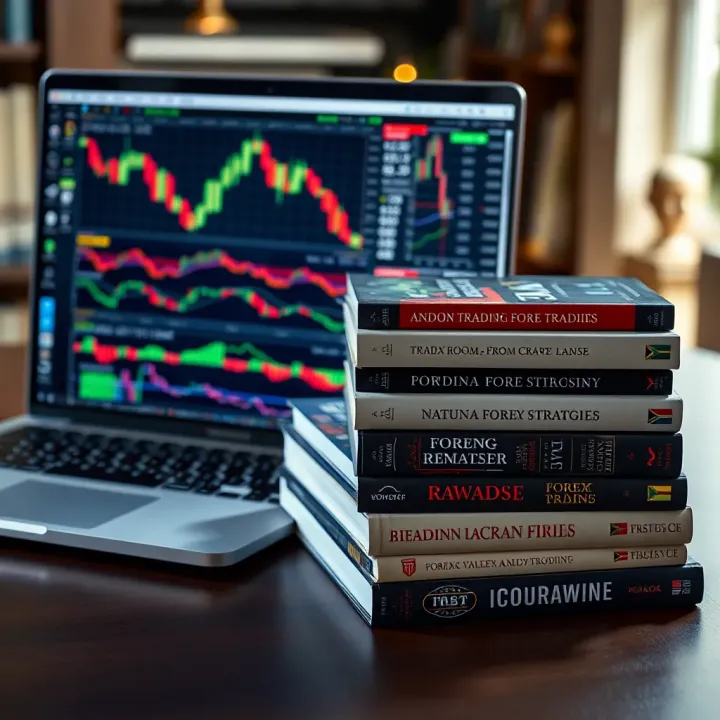
Popular charting methods include candlestick charts, bar charts, and line charts. Candlestick charts are especially favoured because of their visual appeal and ability to show open, high, low, and close prices for specific time periods. These patterns help identify trends such as breakouts or reversals, which are crucial for timing entry and exit points in trades.
Bar charts and line charts provide simpler visuals but can still pinpoint important support and resistance levels. Each method invites a distinct perspective on price behaviour, encouraging traders to spot opportunities or threats early.
Indicators and tools explained: Technical traders use indicators like Moving Averages, Relative Strength Index (RSI), and Bollinger Bands to make sense of price momentum and volatility. For instance, moving averages smooth out price fluctuations and help confirm trends. RSI offers clues on whether currency pairs are overbought or oversold, signalling possible reversals.
Bollinger Bands adjust dynamically to market volatility, signalling when a currency pair might be stretching beyond its usual range. These tools reduce guesswork and give concrete data, aiding better risk-reward decisions.
Applying technical analysis in local contexts: South African forex traders must consider rand-specific factors such as local market hours and volatility spikes during data releases (e.g., SA CPI or trade balance updates). Technical patterns can behave differently around these events, so combining technical analysis with an awareness of the local economic calendar can improve trade timing.
For example, increased rand volatility at data announcements may cause false breakouts on charts, so traders rely on confirming signals or combine indicators before committing.
Impact of economic news and data: Economic reports like GDP growth, inflation numbers, and employment stats directly affect currency valuations. For the rand, quarterly GDP data and monthly inflation figures from Statistics South Africa are closely watched by traders.
When inflation exceeds expectations, the rand might weaken due to fears around interest rate policy changes. Conversely, stronger economic growth often bolsters the rand as confidence rises.
Using central bank policies and interest rates: The South African Reserve Bank (SARB) sets interest rates that influence forex markets dramatically. A hike typically strengthens the rand by attracting foreign capital, while a cut can weaken it.
Traders monitor SARB statements and repo rate changes carefully, adjusting their positions accordingly. Understanding the reasoning behind SARB’s decisions—whether to control inflation or stimulate growth—helps anticipate market reactions.
Relating global developments to the rand exchange rate: Major global events like shifts in US Federal Reserve policies or commodity price moves have immediate impacts on the rand. South Africa’s economy is reliant on exports such as gold and platinum, so a drop in commodity prices often pressures the rand downward.
Similarly, stronger US dollar cycles tend to tighten emerging market currencies including the rand. Staying alert to these global forces provides an edge when trading ZAR pairs.
Titles known for advanced insights: Books like "Trading for a Living" by Dr Alexander Elder and "Technical Analysis of the Financial Markets" by John Murphy offer deep dives into trading psychology, technical indicators, and market mechanics relevant worldwide, including South Africa.
They provide systematic approaches that help traders develop discipline and adapt strategies to shifting conditions.
Case studies and real market examples: Some advanced books feature case studies illustrating how well-known strategies played out in real markets. For instance, they analyse how technical and fundamental factors combined in specific scenarios, including emerging market contexts similar to South Africa.
These examples transform theory into practical applications, helping traders learn from historical outcomes.
Helpful approaches for South African traders: Recommended reading often stresses adapting global techniques to local nuances—like factoring in SARB policies, commodity price sensitivity, and event-driven volatility specific to the rand. These targeted notes assist South African traders in applying broad strategies with a local lens, improving decision-making and risk management.
Practical mastery of both technical and fundamental strategies helps South African forex traders to negotiate the rand’s unique challenges and opportunities with confidence and skill.
Trading survival depends just as much on mindset and managing risk as it does on strategy and market knowledge. South African traders often face extra hurdles, like rand volatility against the dollar and unpredictable geopolitical events, making psychological resilience and risk control essential.
Understanding emotions in trading is key. Markets can whip both ways unexpectedly, stirring fear or greed. For example, after a sudden Eskom announcement affecting the rand, a trader might panic-sell, only to regret it later. Recognising such emotional triggers helps prevent rash decisions that cost money.
Common psychological pitfalls include overtrading, chasing losses, or falling into confirmation bias — seeing only information that supports one's view. These traps can escalate losses quickly and undermine even careful strategies. South African traders should watch for herd mentality during local events; for instance, a spike in trades when municipal election results cause currency jitters.
Building discipline and patience are subtle but powerful. Success often requires sitting on trades, resisting the urge to jump in and out. Discipline means sticking to your plan, such as waiting for technical signals before entering the market instead of acting on a gut feeling. Patience also allows the market to move in your favour, which is important when rand moves can be choppy and unpredictable.
Setting stop-loss and take-profit levels helps control losses and lock in gains without emotional interference. A trader might place a stop-loss 1% below the entry price to limit downside, while a take-profit is set to capture expected upside. This approach is particularly helpful during volatile South African sessions when unexpected news can cause rapid swings.
Position sizing guidelines ensure not too much of your capital is at stake in any single trade. A typical rule is to risk just 1–2% of your total capital per trade. For example, if your trading account is R50,000, risking no more than R1,000 to R1,000 per trade reduces the chance of going bust during rough patches.
Adapting risk strategies for different market conditions is a must. For instance, during Eskom loadshedding-related rand instability, wider stop-losses might be used, or you might reduce position sizes to cope with unpredictable volatility. Conversely, in calmer periods, tighter controls help preserve profits.
Some popular psychology-focused titles provide timeless lessons. Books like Trading in the Zone by Mark Douglas offer insight into managing emotions and thinking probabilistically rather than chasing certainty.
Other books provide insights tailored for forex markets, where split-second decisions meet a constantly moving global stage. Titles focussing on trader mindset and real market examples help South African readers relate these thoughts directly to their local environment, including rand trades and international news impact.
Finally, balancing emotional control with strategy means blending hard skills with soft skills. Good traders combine clear rules for entry, exit, and risk with mental calmness. Being emotionally balanced prevents panic losses and keeps discipline intact, especially when currency markets behave erratically during times of national uncertainty.
Being able to manage your mind and risks effectively is what separates hobbyists from professionals in the forex market.
This approach protects capital, keeps you in the game longer, and turns your trading into a more consistent endeavour.
Choosing the right forex trading books can make all the difference for South African traders looking to sharpen their skills and navigate the rand's unique market movements. Unlike generic guides, books tailored with local context in mind address the economic factors that influence the South African financial environment, making them far more relevant and actionable. Picking books with the right criteria helps traders avoid wasted time on material that might be too theoretical or unsuitable for regional nuances.
South Africa's forex market is tightly linked to the rand (ZAR), which is notoriously volatile due to factors like Eskom's loadshedding, political shifts, and commodity price swings. That means traders need books that take these realities into account. A guide that discusses the impact of interest rate decisions by the South African Reserve Bank (SARB) or explains how global commodity trends affect the rand will be more useful than one solely focused on the US dollar or euro.
For example, a book that highlights trading strategies during periods of SARB rate changes or analyses how rand pairs react to political indabas adds practical value for local readers. Such relevance helps bridge the gap between generic knowledge and applying it in Mzansi's forex context.
Not all forex books carry the same weight. It pays to check who’s behind the material. Authors with a background in South African financial markets or those actively trading locally tend to offer insights rooted in real-world experience rather than just textbook theory. Look for authors who have relevant credentials or demonstrable track records.
A trader aiming to learn from local successes would benefit more from a writer who has dealt firsthand with rand fluctuations and understands the peculiarities of the Johannesburg Stock Exchange (JSE) or the South African Reserve Bank policies. Peer recommendations and reviews from South African trading communities can help identify credible voices.
While theoretical understanding sets a foundation, actionable tactics are what bring trading to life. It’s vital to choose books that balance the two but lean towards practical guidance. Step-by-step instructions, examples of live trades, and case studies from South African market conditions help translate knowledge into practice.
Books heavy on economic theory but light on how to execute trades can leave readers stuck. Conversely, overly simplified books lacking sound fundamentals might encourage risky decisions. A solid forex book offers clear strategies, risk management advice, and methodical approaches that local traders can apply day-to-day.
South African bookshops like Exclusive Books and CNA often stock popular forex titles, though the selection might be limited. Online retailers such as Loot and Takealot offer broader access, often with convenient delivery options, which is handy given that physical stores might not carry specialised finance books consistently.
Shopping locally also supports quicker returns or exchanges, which can matter if you’re investing in multiple titles. Checking local business days and delivery slots can help you plan your learning schedule without delay.
Ebooks and audiobooks provide flexibility, especially for busy traders juggling work and study. Platforms like Kindle and Audible offer many forex books in digital formats. The ability to read on a phone or tablet or listen while commuting makes continuous learning easier.
For South African traders facing data costs, downloading content over Wi-Fi and reading offline can ease expenses. Audiobooks allow for hands-free learning during daily routines, making complex concepts more accessible even without dedicated reading time.
Active online forums such as those on MyBroadband or dedicated Facebook groups provide valuable pointers on which books resonate within South African trader circles. Hearing from peers who’ve tested books in local markets can save you from diving into less useful material.
Additionally, community discussions often share details about special editions, translations, or compilations focusing on South African forex experience. These recommendations help cut through the clutter and highlight books that genuinely impact your trading knowledge.
Selecting the right forex books means finding material tailored to South Africa's unique market nuances, credible authors who understand local conditions, and resources that prioritise practical application over abstract theory.
Discover top forex trading seminars in South Africa 🇿🇦. Learn how these events boost skills 📈, offer key insights 💡, and guide every trader's journey.

🌍 Explore South Africa's free forex trading options! Learn to start with no fees, choose the right platforms, follow rules, and trade smartly today.
📊 Explore top Forex trading schools in South Africa! Learn how to pick the right one, understand benefits & challenges, plus local market tips. 🇿🇦

📈 Discover how forex trading sessions align with South African time! Learn market hours, volatility, and get practical PDF guides to boost your trades.
Based on 8 reviews