
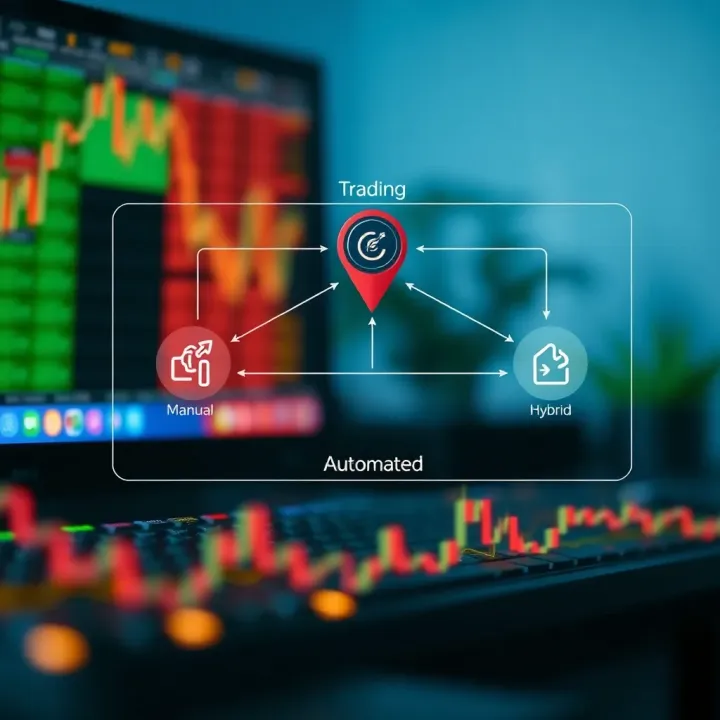
How to Download and Use Forex Trading Systems
📈 Explore practical tips for safely downloading and using forex trading systems. Learn to choose, install, and integrate smartly into your strategy for success.
Edited By
Henry Davies
Forex trading can seem complex, especially when faced with charts full of numbers and strange terms. But at its heart, it is simply the buying and selling of currencies. For South African traders, understanding forex means getting a grasp on how currency pairs work and how market movements influence profit and loss.
A currency pair includes two currencies: the base currency and the quote currency. For example, the USD/ZAR pair shows how many South African Rand (ZAR) one US Dollar (USD) can buy. When you trade this pair, you expect either the USD to strengthen or the ZAR to weaken (or vice versa).
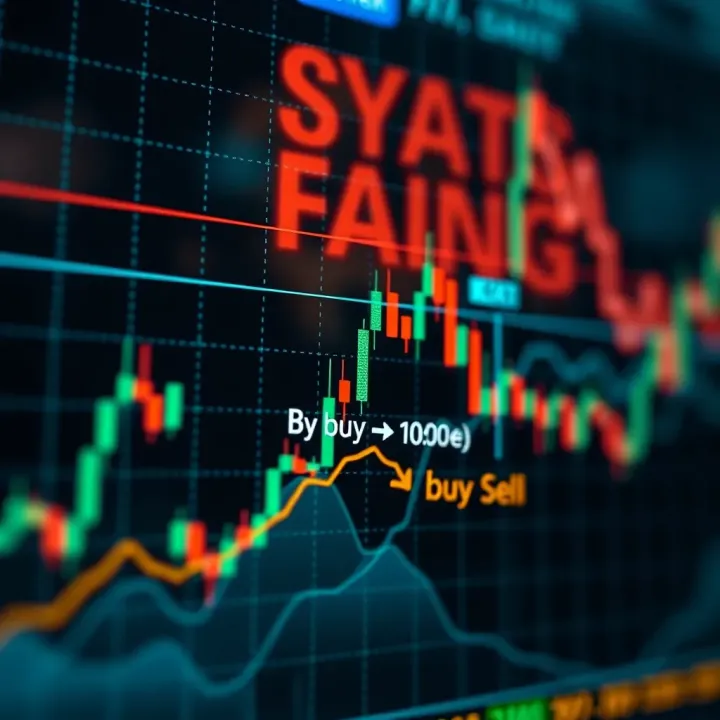
Consider this practical example: suppose the USD/ZAR rate is at 18.50, and you expect the USD to gain strength. You decide to buy 10,000 USD against ZAR. If the rate moves up to 18.80, your position grows in value. Selling your USD at this point yields a profit since each USD now commands more Rand.
Unlike spot trading, some traders prefer contracts for difference (CFDs), which allow you to speculate without owning the currency outright. But be mindful: CFDs magnify both gains and losses, so managing risk is key.
Forex trading is influenced by multiple factors including economic news, political shifts, and even Eskom's load-shedding schedule, which can affect markets locally and globally.
Traders often use strategies to guide decisions, such as:
Trend following: buying when currency pairs show upward momentum
Range trading: spotting when prices bounce between support and resistance levels
Carry trade: profiting from interest rate differences between countries
Managing risk means setting stop-loss orders to limit potential loss, especially important given South Africa's exchange rate volatility.
South African traders should also keep an eye on local economic indicators such as SARB's repo rate, inflation data, and trade balances to anticipate how the rand may react.
These examples help move forex trading from theory to practice — understanding how currency pairs behave, how to apply strategies, and how to handle risk makes forex trading a practical tool rather than just an abstract concept.
Grasping the basics of forex trades through examples helps traders see how market moves impact their money in real time. It's not just about theory — understanding what happens when you buy or sell a currency pair clears up the fog surrounding price quotes and profit or loss scenarios. South African traders especially benefit since local economic shifts and international factors often influence the rand in unique ways.
Taking a long position means you buy the base currency hoping it will strengthen against the counter currency. For example, if you buy USD/ZAR (US dollar against the rand) at R18.50, you’re betting the dollar will gain value relative to the rand. If the pair climbs to R19.00, your position earns profit. This is straightforward and suits times when you expect the base currency to improve economically or politically.
Conversely, short positions involve selling the base currency because you expect its value to drop versus the counter currency. Imagine shorting EUR/ZAR at R20.00, believing the euro will weaken against the rand. If it drops to R19.50, you make money on the decline. This tactic can be handy during periods of rand strength or European uncertainty.
The spread is the gap between the buying (bid) and selling (ask) prices a broker offers. It represents an upfront cost to the trader. For instance, if USD/ZAR’s bid price is R18.50 and ask is R18.52, that 2-cent difference means the price must rise by that margin for you to break even. Lower spreads save money on frequent trades, so picking brokers with tight spreads is crucial for cost efficiency.
Leverage lets you control a larger position than your actual capital. For example, with R1,000 and 1:100 leverage, you effectively trade R100,000 worth of currency. This can magnify gains but also losses — a small adverse move in the market can wipe out your initial amount quickly. South African traders should use leverage conservatively, keeping an eye on margin requirements, especially during volatile events like SARB announcements or geopolitical shifts.
Sound knowledge of buy/sell positions combined with awareness of spreads and leverage can make trading more calculated and less of a gamble.
Each component ties directly to managing risks and seizing opportunities in the fluctuating forex market, equipping traders for better decision-making in their local and global currency moves.
Forex trading in South Africa comes with its own set of unique challenges and opportunities. Understanding how local factors intertwine with global events can give you an edge when trading currency pairs. This section focuses on practical trade scenarios that South African traders often face, with a keen eye on the Rand's behaviour against major currencies like the US Dollar, Euro, and Pound.
The Rand (ZAR) is notably sensitive to domestic economic news. Reports on inflation, GDP growth, and especially South African Reserve Bank (SARB) interest rate decisions immediately influence the ZAR/USD pair. For instance, when the SARB raised interest rates in late 2023 to tame inflation, the Rand gained strength against the Dollar as investor appetite for higher yields increased. Conversely, weaker-than-expected GDP growth or rising unemployment figures can pressure the Rand down, causing volatility.
Being aware of such news can help you anticipate sudden price swings. For example, a trader might choose to avoid opening new Rand/Dollar positions just before a SARB announcement, or use tighter stop-loss orders to manage risk if they do.
Loadshedding disrupts South Africa's economic activity, often spooking forex markets. When Eskom announces stage 4 or higher loadshedding, Rand volatility tends to spike sharply. Traders trading Rand pairs should monitor Eskom schedules and political developments closely, as repeated outages signal fragility in the economy and can lead to Rand weakness.
Political events, such as by-elections or party leadership changes, also weigh on the Rand due to uncertainty. A typical scenario might involve a trader reducing exposure ahead of a tense political period, or capitalising on short-term swings triggered by news. For instance, during the 2021 unrest, the Rand saw sharp drops but also quick rebounds, underlining the need for careful timing and risk limits.
While trading the Rand dominates, cross currency pairs like EUR/USD or GBP/USD present valuable chances for South African traders. These pairs often exhibit smoother trends and higher liquidity, helping traders diversify portfolio risks tied too closely to South African events.
For example, a trader might identify a strong upward trend on the Euro against the Dollar due to European Central Bank moves and take a position accordingly, reducing dependency on Rand volatility. Such opportunities allow more strategic positioning, especially when global markets show clear directional moves.
However, global shifts can abruptly affect these cross pairs. Events like Brexit negotiations or unexpected European inflation numbers create sharp price swings. The Pound, being sensitive to UK political developments, can move rapidly when new trade deals or economic policies surface.
Similarly, global risk sentiment influences both the Euro and Pound. A surge in risk aversion makes investors favour the Dollar as a safe haven, pushing EUR/USD and GBP/USD lower. Understanding these dynamics is vital for South African traders to avoid getting caught off guard by global events that indirectly impact their trades.
Traders benefit most by combining local knowledge with global awareness. Balancing this mix helps manage risk and spot realistic trade setups in South African forex markets.
Understanding common forex trading strategies is vital for traders looking to navigate the market with more confidence and clearer expectations. These strategies offer practical frameworks for deciding when to enter or exit trades, how to manage risk, and when to capitalise on market behaviour. Tailoring these approaches to South African conditions, such as rand volatility or regional economic data, can improve results significantly.
A strong trend occurs when a currency pair consistently moves in one direction over a period, supported by a steady series of higher highs and higher lows in an uptrend, or lower highs and lower lows in a downtrend. For example, the USD/ZAR pair might show a clear uptrend during times of growing US economic strength and weakening rand due to local uncertainty. Traders spotting this pattern watch for pullbacks or retracements as entry points to ride the wave rather than jumping in too early.
Recognising such trends helps you avoid random market noise and focus on momentum, which generally indicates a higher probability of success. Tools like moving averages or the Average Directional Index (ADX) can confirm these trends.
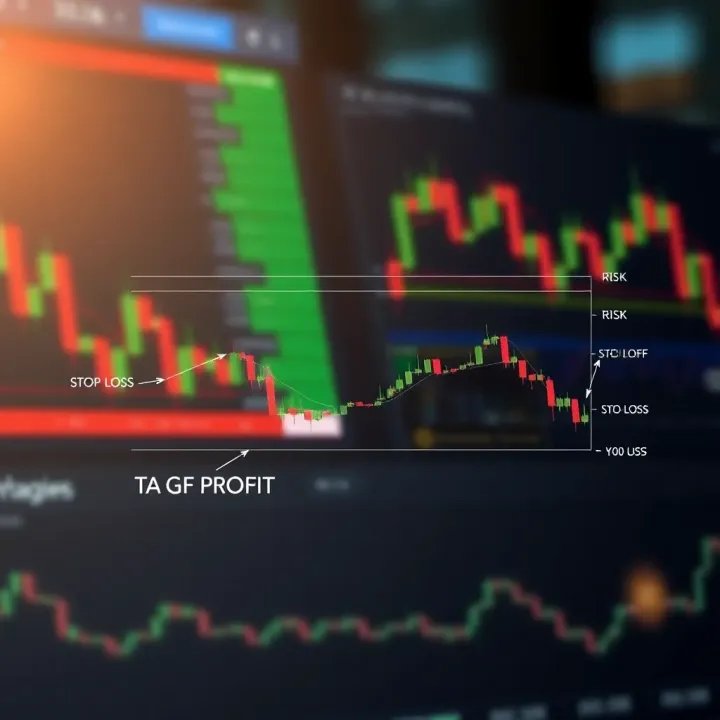
Setting stop-loss orders protects capital by automatically exiting a trade when the market moves unfavourably beyond a certain price. Take-profit points lock in gains once your target price is hit. For instance, if you buy EUR/ZAR at R18.50 expecting it to rise to R19.00, you might set a stop-loss at R18.30 to limit losses if the trend reverses.
Placing stop-loss and take-profit strategically ensures emotional trading does not cloud judgment and safeguards you against unexpected swings—a common feature in forex markets with volatile pairs like the rand. Proper risk management around these levels helps maintain a healthy risk-reward ratio, crucial for long-term trading success.
Support and resistance levels are price points where currency pairs repeatedly bounce off or struggle to cross. Support acts like a floor, while resistance serves as a ceiling. For example, USD/ZAR may find support around R16.50 and resistance at R17.00 over days or even weeks.
Identifying these levels allows traders to take advantage of price swings within the range, buying near support and selling near resistance. This strategy suits markets lacking clear long-term direction but showing predictable short-term oscillations.
A breakout happens when price moves decisively beyond support or resistance, signalling potential for a new trend. For instance, if GBP/USD breaks through a resistance level held for weeks, it might trigger a surge as traders jump on new momentum.
Recognising early breakout signals, such as increased volume or strong candlestick closes past resistance, can offer lucrative opportunities. That said, false breakouts are common; therefore, confirming breakouts with additional tools or waiting for a retest of the breakout level before entering can reduce risk.
Effective forex trading hinges on knowing when to follow trends, when to trade ranges, and how to react when prices break established levels. Combining these strategies with solid risk management can make your trading much more rewarding and less stressful.
Managing risk is fundamental in forex trading, especially given the volatility of currency markets and the potential for swift losses. Practical risk management ensures traders protect their capital, limit exposure, and maintain discipline. South African traders must be particularly mindful due to factors like rand volatility amid local economic shifts or loadshedding impacts.
Stop-loss orders are a straightforward but powerful tool for capping losses. Imagine you buy USD/ZAR at 18.50 hoping the rand will weaken. You place a stop-loss at 18.30, meaning if the price falls back to 18.30, your trade automatically sells. This prevents losing more than you planned if the rand suddenly strengthens. The key is setting it at a level that makes sense technically and respects your tolerance for loss.
Calculating risk-reward ratios guides whether a trade is worth taking. If your stop-loss is 200 pips away, a sensible target might be at least 400 pips. So your risk-reward ratio stands at 1:2, meaning potential profit is twice the possible loss. Traders who ignore this are often exposed to losing more than gains over time — it’s a basic metric to keep your trading account sustainable.
How much of your capital to risk per trade is crucial. For a R10,000 account, risking 2% means you’re willing to lose R200 on a trade. Knowing your stop-loss distance in pips lets you calculate the lot size that aligns with this risk. For example, if your stop-loss corresponds to a R1,000 move per standard lot, you'd trade 0.2 lots to cap risk at R200. This keeps losses manageable relative to your account size.
Avoiding overexposure means not putting too much capital into a single position or correlated trades. If you risk 10% on one trade and another 10% on a related currency, a few unfavourable moves can wipe out your account fast. Spread your risk, use reasonable lot sizes, and stick to your predefined limits to survive the ups and downs of forex markets.
Managing risk isn’t just about avoiding losses; it’s about ensuring you can trade another day. It’s discipline that keeps the lights on when markets swing unpredictably.
By applying stop-loss orders, calculating realistic risk-reward ratios, and sizing positions relative to your capital, you guard yourself against the common pitfalls that ruin many traders. In a market with rapid twists and turns like forex, these simple but practical steps can make a big difference over the long haul.
Interpreting market movements is essential for anyone serious about forex trading, particularly in the South African context where local and global factors blend. Being able to read and understand patterns in real-time helps traders make timely decisions that can save or earn them money. This section shines a light on practical tools to decode price action — especially candlestick patterns and key economic data releases — making forex movements less daunting and more manageable.
Candlestick charts provide a snapshot of market sentiment and price action. A bullish signal, typically shown by a candlestick with a long body at the bottom and a short wick at the top, indicates buyers have control and prices may rise. Conversely, a bearish signal, identified by a candlestick with a long upper wick and short body, signals selling pressure and a potential price drop. Understanding these is crucial for South African traders who rely on quick insights amid volatile phases like Eskom loadshedding or political unrest.
For example, during a period when the South African Reserve Bank (SARB) hints at tightening monetary policy, spotting a bullish engulfing pattern on the Rand-US Dollar pair might suggest strengthening rand momentum. Recognising these signals enables traders to position accordingly, entering long or short trades with more confidence rather than guesswork.
Traders can use candlestick patterns as part of their toolkit to decide when to enter or exit trades. Patterns like Doji (indecision) or Hammer (potential reversal) help interpret possible trend changes or confirm ongoing trends. In volatile local markets marked by currency swings, such as when mining export prices shift or during unexpected national events, these patterns serve as red flags or green lights.
Applying this practically, if a trader spots a hammer pattern after a downtrend in the Rand-Euro pair, it could indicate a bottoming out and a good time to buy. On the flip side, a shooting star after a rally might signal a sell opportunity to lock in profits. Integrating candlestick reading with other tools like volume or moving averages further sharpens trade timing.
Interest rate decisions from the SARB often cause immediate and sometimes sharp reactions in Rand currency pairs. For example, a surprise rate hike tends to strengthen the Rand as higher rates attract foreign capital looking for better yields. When SARB announced an unexpected 0.25% hike in its repo rate during inflation concerns, forex markets reacted with quick Rand appreciation against the US Dollar and Euro.
Traders following SARB statements closely can anticipate volatility spikes and plan trades with tighter stop-loss orders or scalping strategies. In contrast, delaying trades until after the announcement can avoid blind exposure.
US economic data, especially the monthly Non-Farm Payrolls (NFP) report, has a huge global impact, indirectly affecting the Rand. A stronger-than-expected NFP often leads to USD strength, causing the Rand to weaken against the Dollar. For South African traders, this means even though the news is foreign, it can trigger rapid Rand depreciation and wider spreads on Rand-Dollar trades.
For instance, when the US reported an NFP figure exceeding forecasts, the Rand often slipped by 0.5% or more within minutes. Knowing this, traders can pre-position or avoid Rand trades in the immediate run-up to the NFP release, thus managing risk better.
Understanding live market reactions through candlestick patterns and economic data lets you navigate forex trading with sharper instincts. It’s not about guessing but reading the signs that the charts and data provide.
Reading the market this way aligns you better with South Africa’s unique economic landscape and the intertwined global forces shaping currency values.
📈 Explore practical tips for safely downloading and using forex trading systems. Learn to choose, install, and integrate smartly into your strategy for success.
📈 Learn how to use free daily forex trading signals effectively in South Africa. Discover trusted sources, assess reliability, and boost your trading strategy today!
Explore the essentials of forex trading📈, from market basics to key strategies, designed to boost your confidence in currency trading.
📉 Explore key forex trading strategies that reveal how economic indicators, central banks, and geopolitical events shape currency moves. Trade smarter today!
Based on 11 reviews