
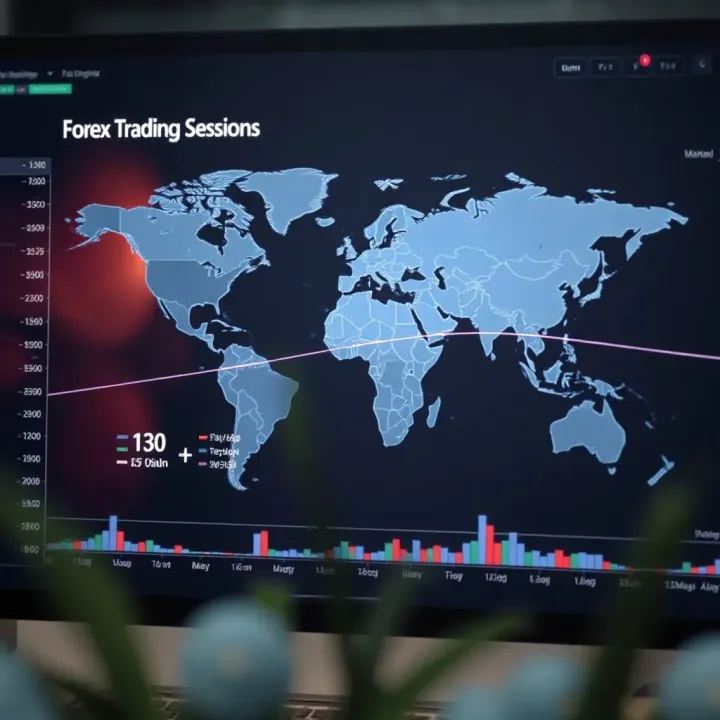
Forex Trading Sessions Explained for South African Traders
📊 Discover how forex trading sessions affect currency volatility and volume. Learn the best times to trade and boost your strategy in South Africa.
Edited By
Oliver Bennett
Forex trading is a global game, but it doesn’t run non-stop like some folks think. Instead, its pace and pulse change dramatically depending on which part of the world you’re in — thanks to forex trading time zones. Knowing when major players jump in or step away can make a big difference between locking in a good trade and getting burned by unexpected market shifts.
In this piece, we'll break down how time zones influence forex market activity, especially focusing on the big sessions from Tokyo, London, and New York. You’ll see why certain hours are busier and how overlaps between markets offer heightened chances for moves.

If you’re trading from South Africa, understanding these time zones isn’t just trivia; it’s a tool to better time your entries, manage risk, and set realistic expectations for market volatility. We’ll explore practical tips tailored to traders working in South African Standard Time (SAST), making forex timing less of a guessing game.
Whether you’re new or a seasoned trader, grasping the rhythm of the market opens up smarter strategies and smoother execution. Stick around if you want to get a leg up on the forex clock and sharpen your trading edge.
Understanding how forex trading time zones work is a must for anyone serious about trading currency pairs. The forex market never sleeps — it’s open 24 hours a day during the week. This continuous operation is split into global sessions, each tied to major financial centers around the world. Knowing these sessions and their timing, especially in relation to South African Standard Time (SAST), can make a huge difference in trading success.
The forex market functions nonstop from Monday morning in Australasia all the way through to Friday evening in New York. This 24-hour cycle means you can trade practically any time, but not every hour offers the same opportunities. Liquidity and volatility fluctuate depending on which financial center is active. For example, when the London session is in full swing, currency pairs involving the euro and the British pound see more movement.
The round-the-clock nature of forex allows traders in South Africa to catch opportunities throughout various parts of their day — be it early morning, midday, or late at night.
Time zones matter because they determine when these sessions start and finish in your local time. Without adjusting for this, you might find yourself trading during quiet periods, leading to slippage or getting stuck in trades that have no momentum. For instance, the Tokyo session often exhibits lower volatility compared to the overlapping hours of London and New York.
To navigate forex trading successfully, South African traders should convert the major market sessions into SAST. For easy reference:
Sydney session: Opens at 21:00 SAST and closes at 06:00 SAST
Tokyo session: Runs from 01:00 to 10:00 SAST
London session: Opens at 09:00 and closes at 18:00 SAST
New York session: Starts at 14:00 and ends at 23:00 SAST
These conversions help traders avoid confusion and spot the best trading windows. For example, if you’re targeting volatile pairs like GBP/USD or EUR/USD, the London and New York session overlap between 14:00 and 18:00 SAST is prime time for action.
Aligning your trading hours with these active sessions isn't just about catching volatility. It also reduces risk by avoiding times when spreads widen and liquidity dries up, like during the Sydney or Tokyo quiet periods. One practical tip is to plan your trading routine to be most alert during key overlaps or main sessions relevant to your preferred currency pairs.
Matching your trading schedule to market hours leads to smarter entries and exits — not just chasing moves in sleepy markets.
In short, grasping forex time zones and how they relate to your own clock can save you frustration and enhance your trading edge. Whether you’re hopping in for quick scalps or holding positions longer, knowing when the big money is moving makes all the difference.
Knowing the major forex trading sessions is key for any trader, especially if you're working from South Africa. Each session has its own personality, driven by the markets opening for business in different parts of the world. This affects everything from volatility to which currency pairs are moving. Understanding these sessions helps you time your trades better and avoid periods where the market is just dragging along.
The Sydney session kicks off the forex day, opening at 9 AM and closing around 6 PM South African Standard Time (SAST). While it’s the quietest of the sessions, it sets the stage for what's to come. For South African traders, this session overlaps slightly with the end of New York's previous day during winter months, creating some interesting early-morning moves.
You can expect lower volume and reduced volatility during the Sydney hours. This session mainly impacts AUD and NZD pairs as it aligns with the business hours down under. The market is often slow to start – think of it as a gentle morning jog before the real sprint starts. Traders often use this period to analyze charts and prepare for bigger moves later on.
The Tokyo session runs from roughly 1 AM to 10 AM SAST. This session is crucial for Asian currencies like the Japanese Yen (JPY), Australian Dollar (AUD), and New Zealand Dollar (NZD). Pairs like USD/JPY, AUD/JPY, and NZD/USD usually see more action here. For South African traders, this means late-night trading if you want to catch the Asian market’s pulse.
While not as frenzied as London or New York sessions, Tokyo brings moderate liquidity and steady price movement, especially early in the session. Volatility is higher than Sydney’s but still manageable, making this session suitable for trading breakouts and spotting trends before Europe wakes up.
The London session opens sharp at 9 AM GMT, translating to 11 AM SAST. This is where things heat up. As one of the biggest financial centers, London drives a huge chunk of daily forex volume. Traders in South Africa can catch peak market activity right during their daytime, which works well for maintaining a work-life balance.
Expect the market to come alive with significant volume and volatility, especially on pairs like EUR/USD, GBP/USD, and USD/CHF. This surge in activity often leads to big price swings and rapid movement, offering prime opportunities for traders who prefer high liquidity and tighter spreads. The London session often sets the tone for the rest of the trading day.
The New York session opens at 2 PM SAST and runs until 11 PM SAST during most of the year. This session overlaps with the latter part of the London session, creating intense activity during the overlap period. South African traders might find themselves switching between active trading during this afternoon slot and preparing for the next day.
The U.S. session is crucial because it can trigger strong market moves based on economic data releases and market sentiment coming from Wall Street. Pairs like USD/CAD, USD/JPY, and EUR/USD often spike with unexpected news. The overlap with London means enhanced liquidity and volatility, often producing the best trading opportunities of the day.
Tip: Pay attention to session overlaps between London and New York—they’re like the forex market's rush hour, where the action is thickest and trading opportunities endless.
By understanding these individual sessions, their timings in South African time, and typical market habits, you can better plan your trades and avoid wasting effort during dull periods. This knowledge isn’t just theoretical—it can directly improve your timing and edge in the market.
Grasping the concept of session overlaps is a game-changer when navigating the forex market. These periods, where two major trading sessions run at the same time, generally mark the busiest and most unpredictable moments in the market calendar. For traders in South Africa, knowing exactly when these overlaps happen and why they matter can mean the difference between catching a favorable move and missing out completely.
At these intersections, liquidity spikes and volatility picks up, upping the game for both short-term traders and those holding positions longer. Rather than trading randomly throughout the day, timing trades around these overlap windows can improve your chance to capitalize on bigger price swings and tighter spreads.
Typically, there are two main overlaps that forex traders watch keenly: the London/New York overlap and the Sydney/Tokyo overlap. In South African Standard Time (SAST), the London and New York session overlap runs roughly from 3 PM to 7 PM. Meanwhile, the Sydney and Tokyo sessions overlap from about 9 PM to 12 AM SAST.
Understanding these windows is crucial. For example, the London/New York overlap coincides with the close of the U.K. market and the opening of the U.S. market, making it the busiest forex trading period. This is because it covers two major economic centers active simultaneously, generating a lot of market orders and price movement.
Market volatility tends to increase during these overlaps because two economic hubs are reacting to news events, data releases, and economic indicators at the same time. This double action thows an edge of unpredictability but also opportunity.
Liquidity surges as well, since two markets combined mean more buyers and sellers are engaged. This increased volume typically narrows spreads, which is favorable for traders as it reduces trading costs. However, the rapid price movements can also catch traders off guard if they're unprepared.
"Trading during session overlaps feels like being at a packed intersection with cars coming from all directions — you either navigate smoothly or risk crashing your strategy."
Pairs involving currencies from the overlapping sessions tend to show the most action. During the London/New York overlap, you can expect pairs like EUR/USD, GBP/USD, and USD/CHF to move actively. These pairs feature heavily traded currencies from both sides of the Atlantic, with plenty of market participants pushing prices.
In the Sydney/Tokyo overlap, watch out for AUD/JPY and NZD/JPY pairs. They often exhibit consistent activity influenced by Asian-Pacific economic news and policy updates.
Given how fast the market moves during overlaps, traders should consider tightening stop-loss levels to cope with volatility, yet avoid being stopped out too early. Scalping or short-term strategies can be especially effective, but they demand sharp focus.
Alternatively, some traders may prefer to ride bigger moves by setting wider targets and avoiding frequent exits. It’s also wise to keep an eye on economic calendars to avoid being caught up in unexpected market swings caused by announcements.
Adapting to session overlaps means being flexible and prepared. For South African traders, this could involve adjusting trading hours to coincide with these overlaps to squeeze the most value from the market’s busiest and most liquid periods.
Understanding and leveraging session overlaps can sharpen your edge, allowing you to tune your trading rhythm to when the market buzzes the most.
Time zones play a significant role in shaping how forex traders plan their moves. Because forex markets operate 24/5 and span multiple countries, knowing when and how different markets open and close helps traders make smarter choices. It’s not just about catching the right time to jump in; it’s about avoiding times when the market’s too sleepy or overly chaotic without reason. For South African traders, who work with SAST, understanding these time zone differences can be the difference between a win and a loss.
Timing your trades around active sessions can boost your chances of entering trades with good momentum. Meanwhile, customizing your strategy for various sessions keeps you from blindly applying one approach to all market conditions. Take the London-New York overlap for example: this period often brings bigger moves, perfect for active traders, but might throw off a long-term position if not accounted for properly.
Trading during peak market hours is like hitting the sweet spot. For example, if you’re trading EUR/USD, the London and New York sessions overlap presents a spike in volume and volatility, presenting more opportunities for profit. You wouldn’t want to place a trade on USD/JPY at 2 AM SAST when Tokyo is winding down and London hasn’t quite kicked off – liquidity dips and spreads widen, making trading riskier.
The key is syncing your trade entries with sessions where your chosen currency pairs are most active. This requires converting global session times to your local time – for South African traders, remembering that London opens around 8 AM SAST can help schedule trades smarter.
Not all hours are created equal. Trading during low-activity periods can mean choppy price action, sudden spikes or false breaks with little follow-through. For instance, the Sydney session often has lower volume compared to London or New York, so trying to scalp during Sydney’s off hours might lead to costly mistakes.
Avoiding these quiet times protects your capital from erratic market behavior. Instead, focus on sessions where volume is thicker, spreads are tighter, and price movements are more reliable. Keeping a calendar or using tools like forex market clocks in SAST helps pinpoint these quieter moments to steer clear.
If you’re a scalper or day trader, catching volatile periods is gold. The London-New York overlap usually delivers sharp price swings due to the combined activity of two major financial hubs. During these hours (about 3 PM to 7 PM SAST), it’s common to see fast price moves on pairs like GBP/USD or USD/JPY.
Scalpers thrive in this environment by grabbing small profits on quick price jumps, but they need to be quick on the draw and ready for rapid changes. Traders need to adjust their stop-loss levels and trade sizes to match the increased risk but also the bigger potential reward during these periods.
On the other hand, long-term traders don’t need to chase every price swing. They care more about broader trends that aren’t distorted by intraday noise. But even they should be mindful of time zones to avoid the whipsaws caused by session openings and closings. For example, a swing trader might wait for the London session open before confirming a trend direction since that’s when European market participants tend to push the price toward major levels.
Also, knowing when certain countries release economic data—usually timed around their local session hours—helps long-term traders plan entries or exits to dodge big volatility or capitalize on it wisely.
Understanding when to trade is as important as knowing what to trade. Tailoring your strategy to the pulse of different sessions gives you an edge.
By focusing on time zones as a core part of trading strategy, South African forex traders can fine-tune their approaches, reduce unnecessary risk during dead zones, and take advantage of energetic market bursts. Simple steps like setting your watch to SAST while staying aware of global market shifts can really sharpen your trading game.
Navigating the forex market from South Africa comes with its own set of quirks, especially when it comes to timing. Aligning your trading activities with global market hours is not just smart — it's necessary. This section will explore some straightforward tips to help you make the most of your trading day without burning out or missing key opportunities.
Knowing when major markets are active can turn your trading from hit-and-miss to consistently informed. In South African Standard Time (SAST), the London session kicks off mid-morning, which is convenient, but the New York session runs late into the evening. Adjust your trading hours to catch these peaks in activity. For example, if you primarily trade EUR/USD or GBP/USD, logging in around 15:00 to 21:00 SAST covers both London and early New York overlaps, leading to more liquidity and better price movements.
Avoid trading during the quieter hours, like the Sydney session that mostly occurs while you're still catching some zzz’s. Instead, set reminders on your phone or trading platform to alert you when key sessions open. This way, you stay aligned with the market rhythm without guessing.
Trading across different time zones can mess with your body clock if you’re not careful. It’s tempting to stay up late during New York hours, especially when big moves happen, but chronic sleep deprivation kills focus and decision-making. Try splitting your trading into blocks — maybe early trading during London hours, then again later in the evening for New York’s start.
Balance is key. Use break times to recharge, and consider automation strategies or limit orders to avoid surfing the market waves all night. One South African trader shared how setting strict 'off hours' helped prevent impulsive trades born from sheer fatigue.
Daylight saving time (DST) isn’t observed in South Africa, but it happens in places like the UK and the U.S., affecting session times. When the UK springs forward, London session shifts one hour earlier on your clock, and during U.S. DST, New York hours move accordingly.
Failing to adjust can cause you to miss session overlaps or trade at less active times. It’s best to mark these dates on your calendar and double-check trading hours a week before changes occur. For instance, U.S. DST usually starts the second Sunday in March and ends the first Sunday in November, impacting your evening trading times.
Manually recalculating time differences can be a headache, especially with DST changes. Luckily, several tools help automate this process. Trading platforms like MetaTrader 4 and 5 often include market clocks that adjust for DST automatically, syncing with your local time.
Additionally, free apps like World Clock or forex-specific market timers can send notifications when sessions open or overlap, tailored to your SAST timezone. Using these tools reduces human error, ensuring you never miss out on prime trading moments due to clock confusion.
Keeping your trading schedule synchronized with global market hours isn't just helpful — it's essential. Managing your time wisely and leveraging the right tools can give South African traders a real edge in the competitive forex market.
Trading forex without a clear understanding of time zones can seriously mess up your results. This section shines a light on the common pitfalls traders fall into when dealing with time zones and how these mishaps can hurt your profits or even make you miss out on good trades. Knowing these mistakes helps you stay sharp and make smarter decisions, especially if you’re trading from South Africa where aligning local time with global market hours matters.
One major blunder is ignoring the specific opening and closing times of forex sessions. Think about it: if you trade without aligning to the active market hours, you’re basically sitting on the sidelines when the market moves the most. This neglect can cause missed opportunities because the best price action usually happens during session overlaps, like when London and New York markets are both open.
For example, a South African trader trying to catch big moves in EUR/USD might trade late at night when both London and New York are closed. The market’s quieter then, so chances of hitting significant swings are slim. Not accounting for time zones here means less profit potential and increased chances of getting stuck in choppy price action.
Many traders don’t realize their trading hours might not sync with the market’s busiest times, leading to lost profits.
Another real-world example is a trader who tries to scalp during the Sydney session, unaware that liquidity is low and spreads are wider. This mismatch happens because Sydney’s session is smaller in forex volume compared to London or New York, so the trader ends up paying more on each trade and facing erratic moves.
Trading during low volume periods can be tempting, especially if you want to stay busy or think the market might pick up. But overtrading when liquidity is thin is one of the fastest ways to drain your account. Low activity leads to wide spreads, erratic price jumps, or false breakouts that can kill your strategy.
In South Africa, this often happens late at night or early morning, outside major sessions. Without enough players in the market, the usual smooth price patterns disappear.
To avoid this, you need to recognize when the market’s taking a breather. Here are a few pointers:
Watch the clock: Know the exact start and end times of sessions in SAST (South African Standard Time). Avoid trading far outside these hours.
Check volume indicators: Many platforms show liquidity levels or volume. Low numbers point to higher risk.
Use economic calendars: Times with no important news are often slower.
Being patient and waiting for the market to pick up can save you from unnecessary losses and help your trades perform much better.
Overtrading during market lulls wastes money and energy without much chance to make real gains.
Understanding and respecting market rhythms tied to time zones is crucial for any trader serious about results. Skipping this step means gambling on unpredictable market moments rather than making educated moves.
Tracking forex market hours properly is a game changer for any trader. Without the right tools, you might miss key moments when markets show their true colors—those bursts of volume and volatility that can make or break a trade. For South African traders, staying aligned with international market times isn’t just smart; it’s essential to avoid standing at the sideline while others are making moves.
Forex market clocks and calendars designed to show session times in South African Standard Time (SAST) help bridge the gap between local time and global markets. Websites like Forex Factory and Investing.com offer customizable market clocks that update in real time. These clocks clearly mark the openings and closings of the Sydney, Tokyo, London, and New York sessions adjusted for SAST, cutting out the headache of calculating time differences daily.
Moreover, forex calendars highlight important economic events and announcements that could shake up price action. Setting alerts on these tools ensures you won’t miss crucial data releases. Imagine getting a heads-up before the US Non-Farm Payrolls or the South African Reserve Bank rate announcements—this gives you an edge to position your trades carefully or step back when the storm hits.
To set these alerts, users can often choose the currency pair or event type and specify the alert window. For example, receive a notification 15 minutes before the London session opens or when the European Central Bank unveils its interest rate decision. This proactive approach reduces the stress of constantly tracking the clock and keeps your focus on analyzing the market.
Most modern trading platforms like MetaTrader 4, MetaTrader 5, and cTrader come with built-in market time trackers that are adjustable to your local time zone, including SAST. These features can highlight different sessions directly on the charts, showing where overlaps occur and helping spot periods with potential spikes in volatility.
Some platforms allow you to automate alerts or even integrate custom scripts that remind you when a session starts or ends. For instance, in MetaTrader, you can add an Expert Advisor (EA) that sends push notifications for session timings, letting you prepare your trades without constantly watching the clock.
Automation doesn’t stop there. You can schedule trades using «pending orders» set to trigger when a specific session kicks off, making sure you’re right on time without manually clicking at 3 AM. This is especially handy if your schedule doesn’t align perfectly with market hours or if daylight saving changes throw off your usual trading routine.
Keeping an eye on market hours through reliable tools is like having a co-pilot who watches the clock and whispers when it’s your turn to act. It minimizes missed opportunities and helps avoid traps during low liquidity periods.
By combining online Forex market clocks, customizable economic calendars, and the smart features of your trading platform, you create a setup that keeps you informed and ready—no matter where you are or what time it is in Johannesburg.
📊 Discover how forex trading sessions affect currency volatility and volume. Learn the best times to trade and boost your strategy in South Africa.

Explore forex trading sessions 🌍, their effects on liquidity & volatility 📈, plus tips for South African traders 🇿🇦 on timing & risk management strategies.

Discover how forex trading hours influence market action, liquidity & volatility. Tailored insights for South African traders to optimise strategies 📈🌍
📈 Explore forex trading hours in South Africa! Learn when markets are most active, how time zones impact trades, and tips for smarter trading strategies. ⏰
Based on 9 reviews