

Where to Learn Forex Trading in South Africa
Discover top places and trusted resources to learn forex trading in South Africa 🇿🇦. From online courses to local workshops, boost your trading skills today!
Edited By
Alexander Price
Forex trading is no longer a mysterious game played only by the elite. With the rise of digital platforms and educational tools, just about anyone in South Africa can learn to trade currencies. But the question remains: where exactly can you learn forex trading effectively without getting lost in a sea of information or scams?
Understanding forex trading involves more than memorizing terms or watching tutorials; it’s about building a strong foundation, gaining hands-on experience, and staying updated as markets shift. South African traders face unique challenges and opportunities, like currency volatility and local regulatory concerns, that make choosing the right learning path even more important.

This article will walk you through practical options for learning forex trading—whether it’s through online courses, mentorship programs, or community groups—and how to spot trustworthy sources from quick fixes or unreliable promises. For traders, investors, and financial analysts serious about entering the forex market, knowing where to learn is the first big step.
Learning forex is a marathon, not a sprint, and choosing the right starting point makes all the difference.
Next, we’ll dive into specific methods South Africans can use to build their forex knowledge and skills.
To get a solid footing in forex trading, understanding the essentials is a must. Without grasping the basics, you’re basically sailing a ship without a compass. This section lays out what forex trading is, the key terms you’ll hear tossed around, and the risks and rewards that go hand in hand with this market. South African traders often jump straight into platforms without this grounding — but those who take time to learn basics tend to avoid costly mistakes.
Forex trading, at its core, is the buying and selling of currencies. It’s the world’s largest financial market, bustling with daily exchanges worth trillions of dollars. Unlike stock markets, forex operates 24/5, making it one buzzing marketplace where currencies like the US Dollar, Euro, and South African Rand are traded based on supply and demand.
Imagine you’re traveling to Europe and need Euros. You’d exchange your Rand for Euros, right? Forex turns this everyday action into a business where traders speculate on currency value changes to make profits. Understanding this basic definition sets the stage for learning strategies later on.
Currencies in forex are always quoted in pairs because you’re exchanging one currency for another. For example, in the pair USD/ZAR (US Dollar against South African Rand), if the price is 15.30, it means one US Dollar costs 15.30 Rand.
Trading means betting whether that price will go up or down. If you believe the Rand will weaken against the Dollar, you’d buy USD/ZAR, expecting to sell it later at a higher price. This pair trading system is the backbone of forex markets and getting comfy with pairs is vital.
These three terms pop up all the time in forex talk. A pip is the smallest price move a currency pair can make—usually the fourth decimal place (0.0001). So, if USD/ZAR moves from 15.3000 to 15.3001, that’s one pip.
A lot refers to the size of your trade. A standard lot is 100,000 units of the base currency, but most beginner-friendly brokers offer mini or micro lots (10,000 or 1,000 units), letting you start small.
Leverage means borrowing money from your broker to control a larger position than what you’ve put in. For example, 1:100 leverage lets you trade 100 times your actual capital. While leverage can multiply gains, it can also magnify losses — always tread carefully.
Forex trading happens 24 hours, starting in Wellington and passing through Asia, Europe, and the US as different markets open and close. South African traders often focus on the London and New York sessions due to overlapping hours, which bring higher liquidity and volatility.
Volatility is how much prices move in a given time. Higher volatility means bigger potential gains—but also bigger risks. You want to understand when the market is ‘awake’ and most active to make smarter trades, rather than diving in when volumes are low and spreads wider.
Forex markets offer the chance to make profits even when prices fall, thanks to the ability to go “short” (selling first, buying later). This flexibility, combined with leverage, can lead to attractive gains in a short timeframe.
Take a local trader who bet early on Rand weakening against the Dollar during a period of economic uncertainty. With the right risk management and timing, profits can be significant, turning small investments into meaningful returns.
Losses are part of the game. Many beginner traders plunge in without stop-loss orders or risk restrictions, which can lead to wiping out accounts fast. It's like driving without brakes.
Managing losses means setting strict limits on how much you’re willing to risk per trade, diversifying trades, and always using stop-loss orders. For instance, if you’re trading USD/ZAR at 15.30, you might set a stop loss at 15.25 to cap losses.
Remember, understanding these foundational elements helps prevent reckless decisions. Forex isn’t a get-rich-quick scheme; it demands education and discipline.
By nailing these basics—what forex is, how currency pairs tick, key terms, and balancing risks and rewards—you’ll be better prepared to move on to more advanced learning options. This groundwork is essential before jumping into live trading or taking courses.
Online platforms have become the go-to for individuals eager to pick up forex trading, thanks largely to their accessibility and wealth of resources. Whether you’re in Johannesburg, Cape Town, or anywhere across South Africa, these platforms give you a chance to learn at your own pace without stepping out of your room. Their strength lies in offering a variety of learning tools—videos, articles, quizzes, and even live discussions—that cover everything from beginner basics to advanced trading strategies.
Websites and blogs make up a solid backbone for any newcomer. Sites like BabyPips or DailyFX offer clear, free guides and timely market analyses. They break down complicated concepts like leverage and margin calls with simple language, which is perfect for those just starting out. Plus, staying updated with blog posts can sharpen your ability to spot trends and news that influence the currency market.
YouTube channels with practical tutorials take the learning experience up a notch by providing visual and step-by-step guidance. Channels such as Trading 212 or ForexSignals TV feature live trade commentaries and strategy walkthroughs. This is straight trade schooling, where you can pause, rewind, and absorb at your speed. Watching a seasoned trader set up a position or analyze charts can make the abstract numbers and charts a lot less intimidating.
Course providers with good reputations are worth considering when you want structured learning. Providers like Udemy, Coursera, or specialized platforms like Forex Mentor Pro usually offer courses led by experienced traders, sometimes including personal feedback. These providers often package lessons in a way that's built to guide you from the ground up through to implementing your own trades.

What to expect from paid courses includes in-depth video lessons, quizzes, downloadable materials, and sometimes access to private forums or live Q&A sessions. Unlike free resources, these courses often dig deeper into risk management, trading psychology, and advanced technical analysis. A paid course can fast-track your skills but be mindful to choose those with positive reviews and transparent instructor credentials.
Benefits of demo accounts can’t be overstated. These are virtual trading platforms where you operate with “fake” money but real-market data. Brokers such as IG or AvaTrade typically offer demo accounts. Demo trading is a safe playground—it lets you experiment with different currency pairs, order types, and strategies without losing a cent. This hands-on practice builds confidence and helps avoid costly rookie mistakes.
Where to find realistic trading simulators usually points back to reliable broker websites or apps that mirror real-time trading conditions closely. It’s crucial to pick simulators with real market volatility rather than outdated price feeds. Some platforms even provide competitions or challenges to spice things up and sharpen your skills with a competitive edge.
Investing some time in online platforms for forex education isn't just convenient—it's vital to developing the skills needed to trade well. Whether you lean towards self-guided videos or carefully curated courses, these tools bridge the gap between theory and the real trading world, making them an essential part of your learning toolkit.
Reading forex books and publications remains a solid way to build a strong foundation in trading. Unlike fast-paced online content, books offer a more detailed and structured approach, giving traders time to absorb concepts fully. Publications, on the other hand, help you keep up with the latest market trends and analytical insights, which is essential since forex markets never stop evolving.
Most South African traders, especially beginners, will find that starting with well-regarded books helps avoid common missteps. Publications such as forex magazines or journals support ongoing education, offering interviews, case studies, and real-world examples that aren’t readily found in basic tutorials.
Several books have stood the test of time by offering practical, actionable advice suitable for both novice and advanced traders. A good example is "Currency Trading for Dummies" by Brian Dolan, which breaks down complex ideas into easy-to-understand language. It's a friendly starting point for traders who feel overwhelmed by market jargon.
For those looking to deepen their strategy, "Trading in the Zone" by Mark Douglas explores the psychological side of trading, addressing common emotional pitfalls. On the technical front, "Japanese Candlestick Charting Techniques" by Steve Nison offers in-depth analysis on chart patterns, helping traders make smarter entry and exit decisions.
Choosing the right book depends on your current knowledge and what areas you want to improve. Make sure to read reviews and sample chapters to find titles that match your learning style and goals.
Staying updated with market news and expert analysis is vital for forex traders. Magazines like Forex Magnates and Wharton Magazine often feature interviews with successful traders and insights into market-moving events.
Forex journals also provide monthly or quarterly updates on currency trends, central bank policies, and economic indicators. This regular infusion of fresh data complements what you learn from books, helping you adapt your strategies as market conditions change.
Keeping a subscription or regularly checking such publications ensures you don't miss crucial shifts in the forex landscape, particularly global events that could impact the Rand or other major currencies.
In South Africa, where access to some international editions may be limited, digital subscriptions or local finance magazines with a forex section can fill the gap. Remember to cross-reference information with reliable sources to avoid outdated or biased insights.
Together, books and publications form a critical part of a trader’s learning toolkit, blending foundational knowledge with up-to-the-minute commentary on the market’s pulse.
Getting started with forex trading can be overwhelming without proper guidance. Mentorship and professional support offer a way to cut through the noise and focus on strategies that actually work. Tapping into the experience of seasoned traders can save you time, prevent costly mistakes, and boost your confidence.
In South Africa, where forex trading is gradually gaining momentum, having a mentor can provide an edge. Rather than just reading about concepts, mentors share firsthand knowledge of market quirks, local regulatory nuances, and practical trading behaviors. This kind of support often goes beyond textbooks, diving into what really moves markets and how to keep your head when others panic.
Connecting with experienced traders starts with getting involved in forex forums and local meetups. Platforms like ForexFactory and BabyPips have vibrant communities, but don’t overlook local Facebook groups tailored to South African traders. These spaces let you ask questions, share your ideas, and catch industry updates.
Networking isn’t just about lurking; it means participating actively—commenting on trades, sharing insights, and building relationships. Over time, these interactions might lead to chats over coffee or longer discussions online. Being part of such a community exposes you to different styles and trading mindsets, helping you see how others tackle risks and rewards.
Don’t wait for mentors to come to you—become visible, show your willingness to learn, and contribute authentically.
Approaching a potential mentor needs tact and respect for their time. Start by understanding their trading background—what currency pairs they focus on or which platforms they use. You might begin with a simple message asking for advice on a specific issue you’ve encountered.
Keep your requests clear and concise, like asking for feedback on your trading journal or their opinion on a recent market move. Avoid vague, unfocused questions; experienced traders appreciate when learners do their homework. Patience is key—it may take a few tries to build rapport before things progress to more direct guidance.
Always show gratitude and be clear about what you hope to achieve. For example, "I’ve been following your posts on the USD/ZAR pair and would appreciate any tips on managing volatility during market openings." This demonstrates genuine interest and respect.
Across major cities like Johannesburg, Cape Town, and Durban, workshops and seminars provide opportunities to learn face-to-face from forex professionals. Events hosted by organizations such as the Johannesburg Forex Academy or local trading clubs typically cover basics to advanced techniques, tailored for the regional market environment.
These workshops often feature live trading sessions, Q&A panels, and breakout discussions that encourage hands-on learning. Since the South African rand has unique economic influences, local seminars help you understand those specific factors affecting forex movements here.
Meeting experts and fellow traders in person creates a level of engagement hard to replicate online. It fosters immediate feedback and dialogue. You can read body language, ask spontaneous questions, and build trust faster. Moreover, workshops often include practical exercises and direct mentorship, which improves information retention.
In-person settings also spark networking opportunities—you might find future trading partners, join study groups, or even snag invites to exclusive trading communities. Having face-to-face conversations enables you to discuss real-time market scenarios and adapt strategies collectively.
Attending live workshops can speed up the learning curve by mixing theory with active, personalized teaching.
By diving into mentorship and local events, South African traders gain a richer, context-aware education in forex trading. These interactions build not only skills but a support system, essential for navigating the ups and downs of the forex world.
Community support and forums play a vital role in forex trading education, especially for traders who prefer real-time interaction and shared experiences. These spaces bring together individuals from different backgrounds and skill levels, creating an environment where learning is continuous and dynamic. For someone starting out or even a seasoned trader looking to sharpen skills, participating in forums and online communities can offer practical insights not easily found in formal courses or books.
Forums often feature traders discussing current market conditions, sharing strategies, and highlighting common mistakes, which can be incredibly valuable. In South Africa, many traders find that community groups act as an informal classroom where they can ask questions and get answers from people who have been through similar situations.
Active forex forums serve as hubs for advice and discussion, where traders exchange ideas, troubleshooting tips, and timely market updates. For instance, platforms like Forex Factory and BabyPips have dedicated sections where members regularly post trade setups and chart analyses. This continuous exchange keeps traders on their toes and provides a spectrum of perspectives that challenge your own views.
What makes these forums especially useful is the ability to see real-world applications of different trading strategies and how others manage risk. Traders can post screenshots, share their thought process behind trades, and receive constructive feedback. Additionally, the archival nature of forums allows newcomers to browse previous discussions and learn at their own pace.
when engaging in forums, be cautious of misinformation and always cross-check strategies or advice against reliable sources or your own research.
Platforms like Facebook and Telegram have become popular venues for forex learning because they combine ease of access with community engagement. Groups on Facebook, for instance, often host live sessions where experienced traders answer questions directly, simulate trades, or dissect recent market moves.
Telegram channels are well-suited for quick updates and alerts; some specialize in real-time news that can affect currency pairs or offer daily trade ideas. These groups tend to be more informal and immediate compared to traditional forums, making them perfect for staying updated throughout the trading day.
However, users must remain vigilant, as these social spaces can occasionally spread unverified information or overly optimistic trading advice. It's wise to use these groups as a starting point or supplementary resource, rather than the sole foundation of your trading decisions.
Active participation in communities lets you avoid feeling isolated, provides motivation, and helps you pick up practical tips that only come from crowd-sourced experience.
By combining insights from forums with social media group interactions, South African forex traders can create a well-rounded learning experience that blends structured analysis with spontaneous market feedback.
Picking the right broker is a vital step when you're starting out in forex trading. It's not just about fees or spreads; a good broker should act like a teacher, offering tools and resources that make learning much smoother. Before jumping into live trading, you want a platform that provides a transparent, supportive environment where you can build confidence and skills without unnecessary stress.
When selecting a broker, consider their reputation, regulatory status, and the quality of their education materials. For South African traders, brokers regulated by entities like the FSCA (Financial Sector Conduct Authority) tend to offer more trustworthy services. For example, brokers like IG Markets and Plus500 have well-established educational sections tailored to beginners.
Not all broker education sections are created equal. A broker that goes beyond basic glossaries or frequently asked questions is worth your attention. Look for educational content that covers a wide range of topics—from fundamental concepts like pips and lots to detailed strategies and risk management techniques.
Check if the broker offers diverse learning formats, such as video tutorials, webinars, and downloadable guides. For instance, IG Markets provides regular webinars that help traders grasp market dynamics in real-time. A strong education section should also include updates on market news and analysis to help you connect theory with practice.
Another practical tip: see if the broker offers quizzes or assessments. This feature can be a good way to test your understanding before moving on to real trading. Remember, a well-rounded educational section should make abstract concepts digestible and actionable.
Using demo accounts provided by brokers is a no-brainer for anyone wanting to get hands-on experience without risking actual money. But not all demo platforms are the same. Look for brokers that give you access to a realistic trading environment with live market prices, customizable settings, and no trial-period limits.
Customer support plays into this too. If you run into technical issues or have questions about using the platform, prompt and knowledgeable support can save you hours of frustration. For example, HotForex and FxPro are known for both solid demo accounts and responsive customer service teams.
A good demo account paired with responsive customer support helps new traders gain confidence, understand platform quirks, and practice various strategies before stepping into real markets.
Make sure the support channels are user-friendly, such as accessible live chat options, email response times, or even local phone lines. This is especially handy if you’re trading from South Africa and want assistance during your own business hours.
In short, your broker should not just be a gateway to trading but an active participant in your learning process. Choosing one that offers comprehensive educational resources, realistic demo accounts, and dependable customer support puts you on a much stronger footing when diving into forex trading.
Starting out in forex trading can feel like stepping into a whirlwind, but practical steps are your anchor. Knowing where to begin helps you avoid common pitfalls and builds your confidence. Setting realistic goals and practicing without risking real money are two key strategies that keep newbies grounded and prepared.
Understanding that forex isn’t a get-rich-quick scheme is the first step. Many new traders expect to turn a small amount of money into a fortune overnight, which rarely happens. Instead, set clear, achievable targets based on your available time and capital.
For example, aim to make consistent small gains instead of chasing big wins. Break your learning into phases: grasp basic concepts within the first month, start demo trading in the second, and begin small live trades after a few months of practice. Timelines vary, but patience is critical.
Setting unattainable goals often leads to frustration and rash decisions. Establishing realistic expectations helps you maintain discipline and stay confident even when the market throws curveballs.
Demo accounts are a godsend for new traders. They let you practice real market scenarios without putting your money on the line. Most brokers like IG or AvaTrade in South Africa offer demo accounts with virtual funds and live data.
Start by learning how to place orders, set stop losses, and manage multiple trades. Gradually simulate different market conditions instead of just one type of trade. This way, you build muscle memory and risk management skills before going live.
It’s tempting to leap straight into live trading, especially if you’ve seen others succeed fast, but practicing on demo accounts can save you hefty losses. For instance, a newbie who practiced demo trading for six months before investing real money generally fares much better than one who dives in headfirst.
Starting small with real funds, maybe as low as 1000 ZAR, helps too. It’s enough to test your strategy but limited enough to keep losses manageable. Combining small live trades with demo practice makes your learning curve a lot smoother and less costly.
By setting realistic goals and using demo accounts, you're building a solid foundation that helps you learn faster and trade smarter. These practical tips reduce stress and increase your chances of long-term success in the forex market.
Discover top places and trusted resources to learn forex trading in South Africa 🇿🇦. From online courses to local workshops, boost your trading skills today!

📈 Explore forex trading basics, strategies, risks, and tips tailored for South African traders looking to navigate currency markets confidently and safely.

📈 Master forex trading in South Africa with our detailed training guide. Learn key strategies, risk management, and essential tools to trade confidently.
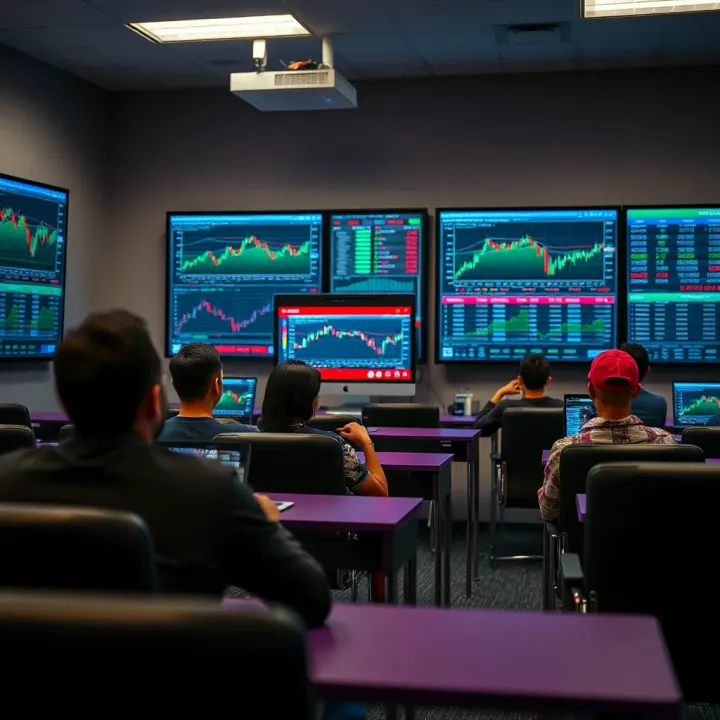
📊 Explore top Forex trading schools in South Africa! Learn how to pick the right one, understand benefits & challenges, plus local market tips. 🇿🇦
Based on 15 reviews