

Fraud and Risk Management for South African Businesses
Protect your South African business with smart fraud and risk management strategies. Learn practical methods, tech tools, and compliance tips today 🔒📊
Edited By
Charlotte Fox
Risk management has become a cornerstone of sound financial practice, especially for traders, investors, and financial analysts who navigate markets daily. In South Africa, understanding where to study this discipline effectively can significantly impact your career trajectory and practical expertise.
This guide sheds light on the top institutions offering risk management courses across the country. Whether you’re looking to earn a diploma, a certificate, or a degree, knowing what’s on the table helps refine your choices. Alongside qualifications, we’ll explore the core course details, what to expect from the curriculum, and crucial factors to consider when picking a program that aligns with your professional ambitions.

In a world where market volatility is the norm, having a strong grip on risk management education isn’t just a bonus—it’s often the difference between profit and loss.
By the end of this article, you’ll have a clear roadmap to make informed decisions about your education path, complete with insider insights on accreditation, emerging trends, and how these programs prepare you for the real challenges of financial risk control.
Grasping what risk management is all about is the foundation for anyone looking to dive into this field. It’s more than just handling crises; it’s about spotting potential issues before they hit and shaping strategies to keep businesses ahead of the curve. For traders, financial analysts, and investors, knowing how risk management works can be a real game-changer in protecting assets and driving smarter decisions.
Risk management covers the methods and processes used to identify, assess, and control risks that might disrupt an organisation's operations or goals. This includes everything from financial risks like credit and market risk, to operational risks such as system failures or human error. Essentially, it's about poking holes in a plan before they sink the whole ship and putting measures in place to patch them up.
Take a manufacturing firm, for instance. If they delay assessing supply chain risks, they might end up with major production stoppages. Risk management, in this case, helps them spot supplier issues early, find backups, or negotiate contracts that mitigate potential losses.
Risk management isn’t a one-size-fits-all: its importance varies by industry but the concept remains critical across the board. The financial services sector, for example, relies heavily on risk assessment to navigate volatile markets and regulatory compliance. Meanwhile, in mining, safety and environmental risks are paramount.
Without proper risk management, companies can face severe consequences—a small glitch in risk awareness in banking might lead to massive losses or legal penalties, while in healthcare, it could even cost lives. For professionals in South Africa’s growth industries, understanding these nuances can set you apart.
Studying risk management sharpens a mix of analytical and soft skills. You'll get comfortable with critical analysis—breaking down complex situations to identify risks quickly. Communication skills are also key because you need to explain these risks and your strategies clearly to stakeholders.
Additionally, skills like decision-making under pressure, strategic thinking, and familiarity with regulatory frameworks become part of your toolkit. Proficiency in tools such as risk assessment software or data analytics will also give you an edge, especially since these technical skills are now in demand.
Risk management opens the door to various roles. For starters, you’ll find positions like Risk Analyst—those who crunch numbers to spot trends and potential pitfalls. Then there’s the Risk Manager, who takes these insights and crafts policies to reduce vulnerabilities.
Other roles include Compliance Officer, focusing on aligning company practices with legal standards, and Portfolio Manager, who blends risk data to optimize investment strategies. Sometimes, you'll find niche roles like Operational Risk Specialist, tailored to specific sectors.
South Africa's financial sector is the obvious hotspot for risk management careers, with banks, insurance companies, and investment firms all needing experts who can navigate fluctuating markets and regulations. Energy and mining sectors also actively recruit risk professionals, given their exposure to environmental and operational hazards.
Public health and government bodies have grown their need for risk expertise, especially after recent events underscored the importance of emergency preparedness and disaster risk reduction. Even retail chains and manufacturing outfits seek risk managers to stabilise supply chains and production lines.
Demand for skilled risk management professionals in South Africa is on the upswing. With increasing economic shifts and regulatory tightening, companies are investing more in risk functions to stay competitive and compliant.
Moreover, the rise of fintech and digital platforms means new types of risks are emerging—cybersecurity and data privacy, for instance—so there’s space for specialists to grow in these areas. For ambitious pros, the field offers upward mobility and chances to branch into consultancy, auditing, or even executive leadership.
Getting the basics of risk management right doesn’t just protect businesses; it creates value and opens doors to diverse opportunities in South Africa’s evolving economic landscape.
When it comes to studying risk management in South Africa, understanding the types of qualifications available is key to choosing the right path. The qualifications range from undergraduate degrees to short courses, each tailored to meet different career goals and expertise levels. Picking the right qualification affects not just your knowledge base but also your employability in a competitive job market.
Bachelor’s degrees relevant to risk management: At the undergraduate level, degrees like the Bachelor of Commerce in Risk Management or Bachelor of Business Administration with a focus on risk provide a solid foundation. These programs cover topics like financial risk, operational risk, and compliance, which are essential for traders and financial analysts. For example, a student studying at the University of Johannesburg might take courses in market risk assessment or insurance principles, gaining practical tools for real-world application.
Duration and study modes: Typically, a Bachelor’s degree in risk management takes about three to four years if studied full-time. However, many South African institutions such as the University of South Africa (UNISA) offer part-time and distance learning options. This flexibility is a boon for working professionals who don't want to pause their careers but want to upskill. It's worth noting that these alternate study modes might extend the duration but allow balancing work and study effortlessly.
Honours and master’s options: For those looking to deepen their expertise, South Africa offers Honours degrees and master's programs focused on risk management. An Honours degree usually takes one year full-time and delves into advanced risk theories and methodologies. Master’s programs can span one to two years and may include research components or practical projects, making them ideal for professionals aiming for leadership roles. For instance, Stellenbosch University’s Master in Risk Management offers a blend of academic rigour with case studies tailored to South African industries.
Focus areas and specialisations: Postgraduate studies often allow specialization in areas like financial risk, credit risk, enterprise risk management (ERM), or even emerging fields like cyber risk. This targeted approach helps traders and investors focus on the risk types most relevant to their sectors. A financial analyst interested in market volatility might choose modules emphasizing quantitative risk modelling, while someone in corporate risk might prefer enterprise risk management electives.
Purpose and benefits: Short courses and certificates provide fast-tracked, practical knowledge for those who want to gain specific skills without committing to a full degree program. These are ideal for industry professionals needing up-to-date techniques or regulatory changes. For example, a certificate course in compliance risk management can be completed over a few weeks and still add value immediately on the job. They also help in building professional credibility without a lengthy study commitment.
Typical providers: Many private training providers and institutions like the Risk Management Institute of South Africa (RMISA) and Business Leadership South Africa offer accredited short courses. Even universities such as the University of Pretoria provide professional development programs tailored to working adults. It’s important to check that such courses have proper accreditation to ensure credentials are recognised by employers and professional bodies.
Choosing between these qualifications often boils down to your current career stage, time availability, and specific risk management interests. A trader just starting out might find a Bachelor’s degree essential, while a seasoned analyst could benefit more from a targeted certificate or a master’s specialization.
Understanding these options allows you to plan your education in risk management effectively, picking the qualification that fits your career ambitions and lifestyle.
When looking into risk management education in South Africa, it’s hard to overlook the leading universities that have carved out strong programs in this field. These institutions don’t just offer degrees; they provide solid industry relevance, experienced faculty, and networking opportunities that are crucial for traders, investors, and financial analysts aiming to sharpen their risk analysis skills. Let’s break down what makes these universities stand out and what you can expect.
Course options
UNISA offers a flexible range of courses tailored to risk management, primarily through their Bachelor of Commerce in Risk Management and various postgraduate diplomas and honours degrees in the field. What’s neat here is the mix of modules that cover everything from financial risk to enterprise risk management, perfect for someone who wants to get a broad yet comprehensive grasp. For instance, if you want to understand how geopolitical factors impact investment risk, UNISA’s course material addresses these real-world issues.
Distance learning flexibility
UNISA’s strength lies in its distance education model, giving students the chance to study without quitting their jobs or relocating. This is a big deal for professionals balancing work and study. They have online tutorials, digital libraries, and well-structured content, making it manageable for busy schedules. So, you aren’t stuck commuting; instead, you can access course materials at your own pace, even from remote areas in South Africa.
Program highlights
At the University of Pretoria, the risk management program is known for its practical approach, blending theory with hands-on projects. Their Master of Management in Risk and Investment Management, for example, dives deep into quantitative analysis and financial modelling—skills that investors and traders find particularly valuable. The curriculum is regularly updated to reflect market changes, ensuring graduates don’t walk away with outdated knowledge.
Industry connections
This university has strong ties to the financial sector, which means you get chances to intern or consult on real-life projects with banks, asset managers, and insurance firms. Say you’re eyeing a career in hedge fund risk analysis; the University of Pretoria's connections can open doors for mentorship or job shadowing in those exact environments. These relationships also help shape course content to stay relevant with what firms actually need.
Unique course features
Stellenbosch offers risk management courses that emphasize strategic risk and sustainability, which is increasingly important in today’s investing climate. Their programmes incorporate case studies focusing on environmental and social governance (ESG) risks, a growing concern among investors. This makes Stellenbosch ideal for those who want to factor in how non-financial risks can affect portfolios and business continuity.
Research opportunities
This university also stands out with its research focus, giving students chances to participate in cutting-edge projects. Whether it’s developing predictive models for market volatility or examining risk appetite in emerging markets, Stellenbosch students often contribute to academic papers and industry reports. This exposure boosts your credibility if you’re planning to pursue senior analyst roles or venture into consultancy.

Choosing the right university isn’t just about prestige. It's about how well the program fits your career goals, the practical exposure it provides, and how flexible it is for your lifestyle.
In summary, UNISA is unmatched for study flexibility, Pretoria offers hands-on industry experience, and Stellenbosch shines in strategic and research-oriented risk management. Weighing these aspects carefully will help you pick a program that genuinely boosts your risk management career in South Africa’s dynamic financial landscape.
While universities often grab the spotlight, other institutions play a vital role in delivering risk management education in South Africa. These include TVET colleges and private training providers, which bring flexibility, practical focus, and shorter study options to the table. For traders, investors, and financial analysts looking to deepen their risk understanding without committing to long-term degrees, these alternatives can be just what the doctor ordered.
TVET colleges offer foundational and practical training that builds core skills needed in risk management. These institutions focus on hands-on learning, which is crucial for understanding risk assessment and mitigation in real-world contexts. Unlike university programs that might get bogged down in theory, TVET colleges give you the nitty-gritty on how risk operates on the ground, often working closely with local businesses to ensure curriculum relevance.
For example, a TVET college might offer a national certificate in financial risk management that covers basics like credit risk, operational risk, and compliance, training you for entry-level roles. This approach is especially valuable for those who want to get their feet wet quickly and then build experience on the job.
Programs available at TVET colleges range from certificates to diplomas, typically lasting a year or two. These include short courses focused on workplace risk, occupational health and safety, and basic financial risk techniques. The Tshwane South TVET College, for instance, offers a National Certificate in Risk and Hazard Management. It covers practical lessons in identifying workplace hazards and managing risks, which aligns nicely with many financial roles where operational risk is a factor.
TVET colleges often allow flexible study schedules and part-time options, making them a practical choice for working professionals who want to keep their day jobs while gaining valuable risk management credentials.
Private providers like Risk Management Academy South Africa and Red & Yellow Creative School of Business specialize in short-term courses tailored for professionals already in the industry or those seeking rapid upskilling. These courses focus on specific risk areas such as enterprise risk management (ERM), compliance, or financial risk analysis.
They tend to offer workshops and modular courses ranging from a couple of days to a few months, which adds convenience. This model suits busy traders or financial analysts who want to stay sharp on emerging risk tools without enrolling in full qualifications. For example, a one-week course on using technology in risk analytics could be a handy add-on to quantitative investment strategies.
One crucial point when selecting private providers is accreditation. Without proper accreditation, some courses might not be recognised by industry bodies or count toward professional certification. Always check for endorsement from bodies like the Institute of Risk Management South Africa (IRMSA) or alignment with South African Qualifications Authority (SAQA) standards.
Choosing accredited providers ensures that the qualification carries weight in the job market and can be a stepping stone toward certifications like the Certified Risk Manager (CRM). Moreover, accredited programs often have more rigorous quality controls, so your learning is both relevant and up to date.
Selecting the right institution, especially within TVET colleges or private training, boils down to matching your career goals with course content and verifying accreditation to avoid wasting time and resources.
This combination of practical training from TVET colleges and targeted professional growth from private providers means you have flexible paths into risk management education in South Africa that suit various stages of your career.
Picking the right risk management course is more than just glancing at the program title or how famous the institution is. It’s about digging into what the course really offers and how it fits your career goals. After all, a strong foundation in risk management can make or break your progress in finance or investment sectors here in South Africa. Let’s break down the key things you should weigh up when making your choice.
Imagine investing time and money in a course that later turns out to be poorly recognized or lacking in real-world applicability. Program accreditation ensures the course meets certain standards set by industry and academic bodies, which means the qualification is trustworthy and respected. It’s a safeguard against ending up with a certificate that won’t open doors in the job market. This quality check also impacts how employers view your skills.
In South Africa, bodies like the Council on Higher Education (CHE) and the South African Qualifications Authority (SAQA) are key players in accrediting risk management programs. Then there’s the Institute of Risk Management South Africa (IRMSA), which offers guidance and endorsements that can boost the credibility of a course. Verifying that a program is registered with these bodies isn’t just bureaucratic red tape; it’s a practical step to ensure you’re setting yourself up for a recognized qualification.
A textbook-heavy program that skips the practical side quickly becomes irrelevant, especially in risk management where real-time decision-making matters. Look for courses that mix theory with case studies, simulations, and problem-solving workshops. For example, a program that includes analysis of recent financial crises or simulations of risk assessment in volatile markets teaches you more than just concepts — it trains you on handling real-world challenges.
Nothing beats hands-on experience when it comes to learning risk management. Programs that integrate internships or require project work let you test what you’ve learned in an actual work environment. Consider the University of Pretoria’s risk management courses, which often partner with financial institutions for placements. This not only enriches your resume but also helps build a professional network and understand industry expectations.
Not everyone can commit to a full-time, on-campus program, especially if you’re already working or juggling other responsibilities. Many South African institutions now offer part-time and online courses that bring the classroom to your living room. For example, UNISA’s distance-learning model is popular because it lets students study from anywhere in the country while managing their own pace.
If you’re in the thick of your career and want to upgrade skills without risking your job, look for programs designed with working adults in mind. Evening classes, weekend sessions, or modular courses can make balancing study and work more doable. Some providers also offer recorded lectures and flexible deadlines, which are lifesavers when unexpected work demands pop up.
Choosing a risk management program isn’t just about what's on paper; it’s about how the course prepares you to face the unpredictable world of finance and investments. Making informed choices here can set you up for steady growth and real success.
By focusing on these aspects — accreditation, course quality, and study flexibility — you’re not just selecting a course, but investing in your future. Remember, the right program will sharpen your skills, fit into your lifestyle, and be valued by employers across South Africa’s dynamic markets.
Professional bodies and certification play a crucial role in shaping a solid career in risk management. These organizations don't just set industry standards—they also provide a network and resources that keep professionals updated and skilled. For someone looking to establish or boost their career in South Africa's risk landscape, joining such bodies and earning recognized certifications can be a game-changer. They validate expertise and often open doors to higher-paying and more challenging positions.
The Institute of Risk Management South Africa (IRMSA) stands as the country's leading professional body dedicated to risk management. Its primary role is to promote best practices, ethical standards, and continuous learning among risk practitioners. Being a member offers tangible benefits like gaining access to exclusive events, mentorship, and industry insights that can be hard to find elsewhere.
If you're serious about advancing your career, IRMSA membership signals to employers that you’re committed to staying in the know and upholding professional standards. Also, their network spans various sectors, offering opportunities to connect with peers in banking, insurance, and even government.
IRMSA doesn’t just stop at membership perks; it provides a well-rounded suite of professional development tools. Their workshops, seminars, and webinars cover topics ranging from regulatory compliance to emerging risks influenced by technology. For example, if you're curious about how data analytics can enhance risk assessment, IRMSA often hosts sessions that break down complex ideas into practical knowledge.
Members also gain priority access to research papers and risk management frameworks that can be applied directly to their work. These resources come in handy for crafting risk mitigation strategies or preparing for certification exams. Plus, IRMSA often partners with universities and training providers to offer courses that count toward continuing professional development credits.
Many South African institutions and employers value international certifications such as the Certified Risk Manager (CRM) and Financial Risk Manager (FRM). The CRM, offered by the National Alliance for Insurance Education & Research, focuses on practical risk management skills applicable across industries like insurance and financial services. On the other hand, the FRM, administered by the Global Association of Risk Professionals (GARP), dives deep into market risk, credit risk, and operational risk—ideal for those eyeing specialized finance or investment roles.
Obtaining these certifications requires passing rigorous exams and often demands work experience, reflecting a blend of theory and real-world application. For traders and financial analysts, holding a CRM or FRM cert can signal advanced risk expertise beyond standard academic qualifications.
International certifications can boost your career in several ways. Employers often recognize these credentials as a mark of professionalism and up-to-date knowledge, which can fast-track promotions or salary negotiations. For instance, a financial analyst with an FRM designation may stand out when applying for roles involving portfolio risk or derivatives management.
Moreover, the global recognition means you’re not limited to local opportunities. It opens doors to multinational companies operating in South Africa or abroad. And because these certs require ongoing education, certification holders stay competitive in a market where risk environments shift rapidly.
Obtaining professional certifications and joining respected bodies like IRMSA is more than a checkbox—it's an investment in your credibility and career resilience within South Africa’s dynamic risk management sector.
Risk management education in South Africa is evolving rapidly, playing catch-up with changing business environments and technological advances. For traders, investors, and financial analysts, understanding these emerging trends isn't just academic—it's critical for staying competitive and informed. As risks become more complex and digital, educational institutions are adapting curriculums to equip students with the necessary tools and perspectives to handle modern challenges effectively.
Curriculum updates in many South African universities now include hands-on training with data analytics software, like Microsoft Power BI and Python programming basics for automated risk assessment. This shift reflects how risk managers today are expected to sift through mountains of data to spot potential threats before they hit. For example, the University of Pretoria recently introduced modules that require students to analyze real datasets, simulating risks in sectors such as mining and financial services.
Technology isn't just a side note; it's becoming the backbone of risk management education.
This practical angle prepares students better for today's job market, where understanding advanced tools is often a job requirement rather than an option.
Market demand for digital skills has surged, with companies actively hunting for candidates skilled in data interpretation, cyber risk assessment, and automated reporting. South Africa's growing fintech scene, concentrated in hubs like Cape Town, demands professionals who can navigate risks caused by technological disruptions. Skill sets in AI and machine learning, even at a basic level, greatly enhance career prospects. For financiers and analysts, this means that keeping abreast of such trends through short courses or workshops may secure better job fits within growing sectors.
With the rise of ERM, risk management education is pivoting towards holistic risk approaches. Instead of siloed risk assessments, students are taught to consider all facets of an organization—from financial, operational, to reputational risks—as interconnected. This strategy is crucial in volatile markets or industries prone to sudden shifts, such as energy or manufacturing sectors in South Africa.
A practical example is how the University of Cape Town integrates case studies involving whole-company risk strategies—helping students to think broadly about risk mitigation beyond just numbers.
Growing importance in corporate South Africa reflects the increasing adoption of ERM frameworks in large businesses. More companies here are appointing Chief Risk Officers who require staff trained in comprehensive risk frameworks. For professionals in finance and investment, understanding ERM is becoming a baseline skill—not just an extra.
This shift signals a demand for professionals capable of spotting subtle risk indicators across different departments and responding swiftly, making ERM-focused education essential for career advancement.
The intersection of technology, data analytics, and enterprise-wide thinking is setting the new standard for risk management learning in South Africa. For anyone aiming to enter or advance in this field, embracing these trends through updated education programs will pay dividends in the real world.
Paying for education is often the trickiest part of pursuing any career, and risk management courses in South Africa are no exception. Understanding how to finance your studies matters because it sets the foundation for your educational journey without causing financial strain. For traders, investors, or analysts aiming to boost their skillset through risk management, knowing your financing options lets you focus on learning rather than stressing over bills.
The cost of risk management programs can vary widely—from more affordable certificates at private providers to full degrees at universities. Without a solid financing plan, some promising candidates might miss out on gaining critical skills. Fortunately, South Africa offers several practical ways to alleviate these costs, including scholarships, bursaries, student loans, and payment plans.
Scholarships and bursaries are essentially ‘free money’ that can cover tuition fees, and sometimes even living expenses. In South Africa, these funds come from universities, government bodies like the National Student Financial Aid Scheme (NSFAS), private companies, and industry organizations such as the Institute of Risk Management South Africa (IRMSA).
Eligibility often hinges on academic merit, financial need, or specific criteria like being from an underrepresented community. For example, some bursaries target students from rural areas pursuing risk management. Keep in mind, bursaries usually require a commitment to work for the sponsoring organization upon graduation, while scholarships tend to be more flexible.
This type of funding is a lifeline for many students who might otherwise find risk management studies out of reach.
When applying for scholarships and bursaries, preparation is key. Start early, gather all necessary documents like academic transcripts, proof of income, and reference letters. Tailor your application to highlight your passion for risk management and future career plans—it’s not all about grades.
Pay close attention to deadlines, which tend to be strict. Also, don’t hesitate to apply for multiple bursaries or scholarships; stacking opportunities can cover a bigger chunk of your costs. Finally, be honest and thorough in your application to avoid delays or rejections.
If scholarships don’t cover your costs, student loans are a common fallback. In South Africa, NSFAS offers interest-free loans to qualifying students, which only become repayable after graduation and once you earn above a certain threshold. Many banks, like Standard Bank and ABSA, also offer education loans, but these usually have interest rates and stricter approval processes.
Some universities provide flexible payment plans allowing you to spread tuition fees across a semester or year. This option suits students who can earn income part-time or have a steady monthly budget.
Loans might be tempting, but understand the terms clearly before signing up. Know your grace period, interest rates, and monthly repayment expectations. NSFAS loans are more forgiving with repayments, but commercial loans might lead to financial pressure if your career doesn’t kick off immediately.
Budgeting ahead is wise. For instance, if you’re an entry-level financial analyst, calculate your anticipated salary against loan repayments to avoid surprises. Defaulting on student loans can damage your credit score and limit future financial options.
Carefully balancing study funding with repayment ability ensures that advancing your skills doesn’t come at an unbearable cost later.
In short, securing the right mix of scholarships, bursaries, and loans can make a real difference in managing the cost of risk management studies in South Africa. By staying informed and proactive, you can focus more on gaining valuable knowledge and less on financial headaches.
Studying risk management is just the first step; building a successful career requires strategic moves and consistent effort. Understanding how to translate your education into tangible career progress matters more than ever. Whether you're fresh out of university or looking to shift gears within the financial sector, practical experience and continuous learning will keep you relevant in this competitive field.
Internships and volunteer opportunities play a vital role in bridging the gap between classroom knowledge and real-world application. Many firms in South Africa, including Johannesburg-based financial service providers like Old Mutual and Liberty, offer internship programs that expose you to actual risk assessment tasks. These setups let you make mistakes in a controlled environment, learn from seasoned professionals, and build a track record that speaks louder than a resume.
Volunteering with non-profit organisations or assisting smaller businesses with risk audits can also sharpen your skills. The key here is active engagement; don't just observe, but ask questions, take initiatives, and request feedback. This hands-on approach often opens doors you didn't even know existed.
Networking strategies are your secret weapon for career growth. Attending industry events hosted by the Institute of Risk Management South Africa (IRMSA) or connecting with professionals on LinkedIn could land you mentors or even job offers. Try to engage in meaningful conversations rather than formal introductions — share insights about recent risk trends or innovative techniques you’ve learned. Often, the best opportunities come from casual chats rather than formal interviews.
Also, joining local risk management forums and discussion groups can keep you sharp and informed. Remember, who you know can sometimes be just as important as what you know.
The risk landscape never stays the same, making lifelong learning essential. Whether it’s new regulations, emerging technology like AI-driven analytics, or evolving enterprise risk management strategies, staying up-to-date can set you apart from your peers. Many successful risk professionals set regular personal goals for skill upgrades and knowledge enhancement.
Recommended courses and workshops often come from well-established bodies like IRMSA or global certifiers such as the Global Association of Risk Professionals (GARP). For example, short courses on credit risk analysis or emerging risks in cybersecurity are practical and highly sought after. Even workshops on soft skills like communication can drastically improve how you convey complex risk concepts to stakeholders.
Remember: Continuous learning is not just about ticking boxes; it’s about deepening your ability to anticipate, evaluate, and mitigate risks before they spiral out of control.
Allocating time annually to attend these sessions—even if brief—builds both expertise and credibility. It signals to employers that you are proactive and serious about your role in safeguarding business interests.
As you map your career in risk management, combining practical experience with a solid learning path will keep you well-positioned amid South Africa’s evolving financial and corporate sectors. It’s less about shortcuts and more about steadily stacking relevant skills and connections that propel your career forward.
Protect your South African business with smart fraud and risk management strategies. Learn practical methods, tech tools, and compliance tips today 🔒📊

Learn the step-by-step risk management process 🛡️ to identify, assess, and control risks, helping South African businesses protect and grow safely.
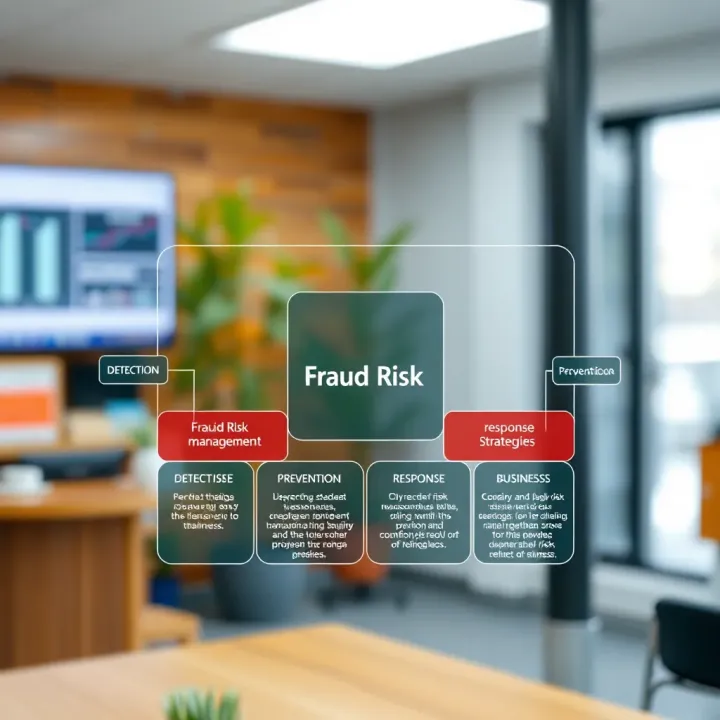
Protect your business with our comprehensive fraud risk management guide 🛡️ Learn to identify risks, apply tech solutions, and comply with standards to fight fraud effectively.
📊 Risk management shields your business and assets from setbacks, builds trust, and guides smart decisions across sectors. Learn practical steps here.
Based on 12 reviews