

Binary Option Demos: Guide for South African Traders
Discover how binary option demo accounts can help South African traders practise risk-free, learn platform features, avoid pitfalls, and improve skills confidently 📈💡
Edited By
Ethan Walker
Binary trade is a financial tool that simplifies market speculation by focusing on one key question: will the price of an asset go up or down within a set period? Unlike traditional trading, where profit depends on the price difference, binary trading offers a fixed return or nothing at all, making it easy to grasp but equally risky.
For South African traders, understanding how this works is crucial. Popular assets include stocks from the JSE, currencies like the rand versus the dollar, commodities like gold and platinum, or even global indexes. You pick an asset, predict whether its price will rise or fall before expiry, and stake an amount. If your prediction holds true, you earn a predetermined payout; if not, you lose your stake.

Here's a basic example: You bet R500 that the rand-dollar exchange rate will rise within 30 minutes. If it does, you earn around R850 (your initial stake plus R350 profit). If it falls or remains the same, your R500 stake is lost.
Binary options are popular because of their simplicity and fast turnaround. However, the all-or-nothing nature means losses can add up quickly, especially when market volatility spikes. This makes sound risk management vital.
“Always trade with money you can afford to lose. Binary trading is not a steady income stream but a high-risk, high-reward activity.”
Besides risk, South Africans need to stay alert about regulation. The Financial Sector Conduct Authority (FSCA) monitors financial practices but currently, most binary options providers operate offshore. This lack of local regulation increases the risk of scams or unfair practices. Before trading, verify whether a broker is FSCA-authorised or at least reputable internationally.
In the sections ahead, you'll find clear breakdowns of binary trade mechanics, risk strategies, and steps for safely engaging with these products in South Africa. Approach binary trading informed and cautious — it can be a quick way to expose your capital if you aren't careful.
Binary trading offers a straightforward way for individuals to speculate on financial markets by predicting whether an asset's price will rise or fall within a specific timeframe. This simplicity makes it appealing to many South African traders who want exposure to markets like forex, commodities, or indices without needing deep technical analysis.
At its core, binary trading involves making a yes-or-no decision: Will the price of a chosen asset be above or below a certain point at a set expiry time? This fixed-outcome format means traders know their potential profit or loss right from the start.
Binary trading is a form of financial speculation where the outcome is binary — either you win a fixed sum or lose your initial stake. Unlike traditional trading where profits can be unlimited or losses can exceed the initial investment, binary options offer all-or-nothing results within a predetermined timeframe. For example, a trader might bet R1,000 that the price of gold will be higher in one hour. If right, they could earn a fixed return, say R1,800; if wrong, the R1,000 is lost.
This clear payoff structure makes binary trading accessible but also means every decision involves a clear risk.
Traders analyse market data, economic indicators, and news events to guess the direction of an asset’s price within a timeframe that can range from minutes to days. The key decision is selecting the type of binary option and strike price before expiry. For instance, a trader might expect the rand-dollar exchange rate to strengthen and choose a “call” option predicting the rate will be higher at expiry.
Successful decisions depend on timing and market understanding, but because the loss or gain is known upfront, it demands a disciplined approach to risk.
Unlike standard share or forex trading, where profits and losses fluctuate with price changes during the trade, binary trading locks in your risk and reward upfront. Traditional trading can require managing complex positions, stop-loss orders, and margins. Binary trading, by contrast, simplifies this to a single bet on price movement.
However, that simplicity also means there's no partial profit or loss — it's either all or nothing. Traders need to accept that the risk of losing their full stake is real, unlike some traditional trades that can be adjusted or closed to reduce losses.
These are the most popular type in binary trading. Traders predict whether an asset’s price will be higher or lower than a set strike price at expiry. For example, if a trader believes that the price of Brent crude oil will exceed R1,200 per barrel in 30 minutes, they buy a "high" option.
The simplicity of High/Low options makes them ideal for beginners. They’re easy to understand and execute — simply pick the direction and expiry time.
In Touch/No Touch options, traders bet on whether the asset price will touch a certain level before expiry. For example, a "touch" option means profit if the price touches or surpasses a predetermined level anytime within the contract period.
This style suits traders expecting significant price moves but might be harder to predict as it doesn’t require the level to hold at expiry, just to have been touched.
Range options require the asset’s price to stay within or move outside a defined range by expiry. This is useful in markets with low volatility where prices are expected to trade sideways.
For instance, a trader could select a range of R14,000 to R15,000 for the JSE Top 40 index and earn a payout if the index remains within those limits during the option period.
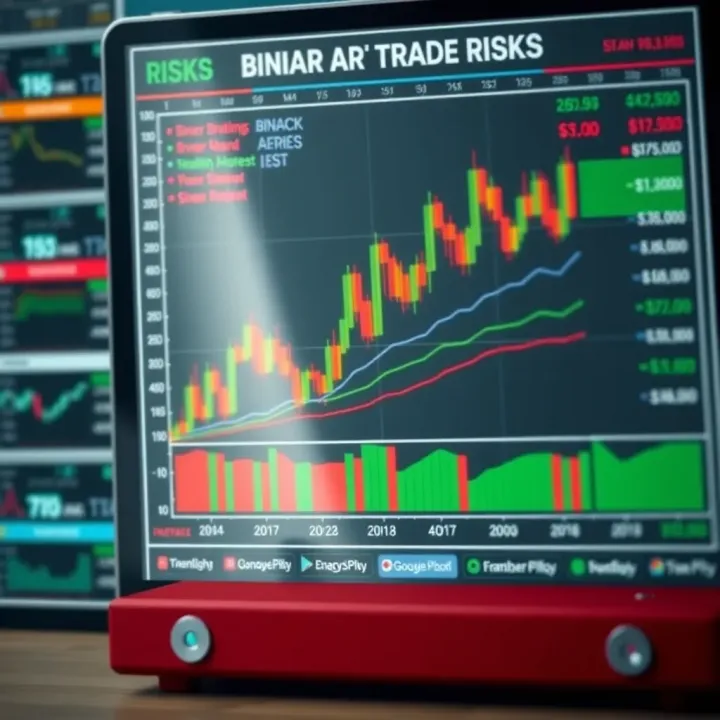
This type offers a way to profit from stable market conditions, balancing the risk of sharp price moves.
Binary trading’s fixed-risk, fixed-reward nature appeals because it lets traders plan their stakes with clarity. But it also demands careful strategy and an understanding of each option type’s characteristics.
Understanding the balance between potential earnings and losses is vital for anyone contemplating binary trading. This section highlights key aspects to consider, helping South African traders weigh their options realistically rather than diving in blindly. Knowing what’s at stake and how much you can make or lose upfront makes a big difference to managing expectations and strategy.
Fixed returns explained
Binary trading typically involves fixed returns, meaning you know in advance the exact payout if your prediction is correct. For example, if you invest R1,000 on a high/low option and the broker offers a 70% payout, a winning trade nets you R700 profit plus your initial R1,000 stake. This certainty simplifies planning since you can calculate potential rewards before making a move.
Total loss potential
On the flip side, the maximum loss equals the amount you put in. In our example above, that would be R1,000 if your prediction is wrong. This all-or-nothing scenario means traders must be cautious, as repeated losses can quickly eat away at capital. Understanding this total-loss potential encourages disciplined risk management.
Examples of typical trades
Consider a South African trader betting on the rand-to-dollar exchange rate to rise within 30 minutes using a binary option. If correct, they get a fixed return, say 75%, on the invested amount. If not, the full stake is lost. These straightforward trade setups attract beginners but require careful timing and analysis to avoid losses.
How to spot unreliable brokers
Unfortunately, the binary trading space attracts sketchy operators. Red flags include promises of guaranteed high returns, pressure to deposit more funds, or lack of clear contact details. Reliable brokers disclose licensing details, offer transparent terms, and maintain solid customer support. Always cross-check broker credentials with South African regulators like the Financial Sector Conduct Authority (FSCA).
Risks of unregulated platforms
Traders using unregulated or offshore platforms risk losing money without recourse. These platforms may manipulate prices, delay withdrawals, or suddenly close accounts. Without FSCA oversight or similar safeguards, recovering funds becomes nearly impossible. That’s why sticking to regulated brokers isn’t just sensible — it’s essential to protect your money.
Importance of due diligence
Because scams are common, traders must do thorough research before committing funds. Check reviews from reputable South African financial sites, confirm FSCA licences, and test platforms with demo accounts. Taking these steps helps avoid costly mistakes and ensures you trade in a safer environment.
Knowing the risks and rewards upfront is no luxury but a necessity for smart trading. Firm understanding equips you to make clear-headed decisions and avoid costly traps.
Navigating the legal landscape is essential for anyone looking to get involved in binary trading in South Africa. The regulations help protect traders from unscrupulous operators and provide clear rules on how the trading should be conducted. For South Africans, understanding these laws is not just about compliance but also about safeguarding your hard-earned money.
The Financial Sector Conduct Authority (FSCA) plays a critical role in regulating financial markets in South Africa, including binary options trading. Essentially, the FSCA oversees market conduct to ensure that brokers and financial service providers act ethically and transparently. Traders should always check if their broker is FSCA-licensed, as this licence means the broker has met minimum standards for honesty, operational soundness, and capital requirements.
The FSCA’s role extends to investigating complaints against brokers and enforcing penalties for misconduct. For example, in recent years, several brokers have been blacklisted for operating without licensing or engaging in misleading advertising targeted at South African traders.
Binary options themselves have faced legal scrutiny both globally and locally. In South Africa, binary options trading is not forbidden but is closely regulated, given its nature of fixed returns and high-risk exposure. The FSCA treats binary options as financial instruments, meaning they fall under the same regulatory umbrella as other derivatives.
South African traders should note that trading binary options through overseas platforms without FSCA oversight can be risky. Some foreign brokers operate outside South African laws, leaving traders with limited recourse in case of disputes. Therefore, binary trading platforms registered with the FSCA offer a safer environment for local traders.
South African law provides several consumer protections designed to shield traders from fraud and unfair practices. These include clear disclosure of trading risks, rules against false advertising, and access to dispute resolution through bodies like the FSCA ombudsman.
Moreover, the FSCA requires brokers to segregate client funds from their operational capital. This means that even if a broker runs into financial trouble, client money should remain protected. For traders, these protections are a practical safeguard, especially in a market known for volatility and occasional sharp losses.
Always be cautious with brokers promising guaranteed profits or unusually high returns — these are often red flags.
Working with an FSCA-regulated broker significantly reduces your legal risks. Regulated brokers must follow strict rules, including maintaining sufficient capital, providing transparent pricing, and offering fair client treatment. Conversely, unregulated brokers might operate without accountability, making it difficult for traders to recover funds or lodge complaints.
For example, a South African trader using a broker without FSCA oversight may find themselves powerless if the platform suspends withdrawals. Regulation thus acts as a safety net, though not a guarantee against all risks.
Any profits made from binary trading are considered taxable income in South Africa. The South African Revenue Service (SARS) expects individuals to declare such earnings, which could fall under personal income tax or capital gains tax, depending on the trading frequency and intention.
For casual traders, profits typically count as part of your gross income, taxed at your marginal rate. However, if binary trading forms your primary income source or business, SARS may classify earnings differently, possibly requiring VAT registration.
It's advisable to keep clear records of trades, deposits, and withdrawals to simplify tax submissions and avoid problems with SARS.
Apart from declaring income for tax purposes, South African traders should be aware of broader reporting obligations. Brokers regulated by the FSCA must keep detailed records of client transactions and identities, helping prevent money laundering.
Traders should ensure that when opening accounts, all required documentation under the Financial Intelligence Centre Act (FICA) is provided. This includes proof of identity and residential address. Failure to comply with these requirements can lead to account suspension or closure.
Maintaining transparency in this way not only keeps you on the right side of the law but also contributes to the overall health and safety of the trading environment.
Understanding and respecting these regulatory and legal frameworks will help South African binary traders minimise risks and make more informed choices. Always prioritise dealing with licensed brokers, stay up to date on tax obligations, and adhere to reporting requirements to trade confidently and securely.
For South African traders, the right approach to binary trading means balancing opportunity with caution. Given the risks involved and the local regulatory landscape, taking practical steps in choosing brokers and trading strategies can often make the difference between loss and gain.
Checking FSCA licences and broker credentials: Always start by verifying if the broker is licensed by the Financial Sector Conduct Authority (FSCA). A legitimate FSCA licence means the broker operates under South African financial law and is subject to consumer protections. Traders should be wary of platforms that claim to be regulated but lack a verifiable FSCA registration—the risk of scams or unsecure funds rises considerably here.
Evaluating platform features and fees: Evaluate trading platforms based on user interface, speed, and transparency of fees. Some brokers show hidden charges or high withdrawal fees. For example, a platform that charges a flat R200 withdrawal fee can quickly eat into your profits, especially if you're trading small amounts. Look for platforms offering clear fee structures, real-time charts, and tools like stop-loss orders to assist decision-making.
Account setup and deposit methods: Setting up an account should be straightforward but also secure. Look for platforms that support familiar deposit methods such as EFT transfers from South African banks like FNB or Capitec, or even popular mobile wallets. Avoid brokers that insist on obscure cryptocurrencies or complicated third-party payment systems without clear tracking—it complicates fund recovery if issues arise.
Basic trading strategies: Beginners should focus on straightforward strategies such as the “trend-following” method—buying a high option when prices move upwards steadily, and low when a downtrend is clear. Avoid chasing quick wins through risky bets on volatile assets. Consistency beats gambling in binary trading.
Risk management techniques: Learn to limit losses by setting how much of your trading capital you risk per trade—usually no more than 2-5%. This prevents a bad streak from wiping out your entire account. Also, use tools like stop-loss orders if the platform supports them, and never trade with money you depend on for monthly expenses.
Using demo accounts to practise: Nearly all reliable brokers provide demo accounts where you can trade with virtual money. Take advantage of these to understand platform mechanics, test your strategies, and get comfortable before risking real Rand. It's a safe way to learn how market movements affect your trades without the stress of losing cash.
Starting binary trading without these practical steps is like braaing without checking the firewood—chances are you’ll just end up with smoke and no meal.
Approaching binary trading with diligence and practical know-how can help South African traders navigate the market more safely. Remember, it’s about steady, informed choices rather than rash decisions.
Binary trading can seem straightforward, but it's not the only way South Africans can engage with financial markets. Exploring alternatives like trading Contracts for Difference (CFDs), Forex, and investing in the Johannesburg Stock Exchange (JSE) or Exchange-Traded Funds (ETFs) gives traders more tools and options to match their risk appetite and investment goals.
CFDs and Forex trading offer more complexity compared to binary options. Instead of a simple yes-or-no bet, traders buy and sell contracts representing the price movements of assets like stocks, commodities, or currencies. This allows for greater flexibility, such as setting stop-loss orders or leveraging positions to potentially magnify gains. However, this increased potential also means higher risk — losses can exceed the initial deposit if not carefully managed.
For South African traders, understanding these risks upfront is vital. CFDs and Forex require a bit more technical knowledge, from reading charts to grasping market sentiment. They're not a quick win but can suit those willing to put in time learning and refining strategies.
Popular platforms in South Africa for CFD and Forex trading include IG Markets, HotForex, and FXTM. These brokers are FSCA-regulated or adhere to global standards, offering features like local currency funding, mobile apps, and educational resources. Choosing a platform with a good reputation and proper licensing helps avoid scams and ensures safer trading.
The JSE presents a broad spectrum of investment options, from shares in established companies like Naspers and Sasol to industries ranging from mining to telecommunications. ETFs provide a way to invest in a bundle of assets, offering instant diversification without needing to pick individual shares. Examples popular among South African investors include the Satrix 40 ETF and the CoreShares Top 50.
Investing in the JSE or ETFs generally focuses on long-term growth rather than short-term speculation. Equities tend to offer the chance to build wealth steadily, benefitting from company profits and dividends over time. This suits investors looking beyond the immediate swings common in binary or Forex trading.
Access through local brokers like FNB Securities, Standard Bank Online Trading, and EasyEquities makes entering the stock market straightforward. These platforms usually offer user-friendly interfaces, educational content, and competitive fees at a local level. They also allow funding in Rand, which simplifies accounting and tax compliance for South African investors.
Tip: Before choosing an alternative to binary trading, consider your risk tolerance, investment horizon, and whether you want active trading or a more passive approach. Each option has its place depending on your personal goals and how much time you're ready to spend learning.
Exploring these alternatives can provide a more balanced portfolio and potentially lower risks compared to the more fixed-odds nature of binary trading. For South Africans, tapping into local markets and regulated platforms adds layers of security and opportunity worth considering seriously.
Discover how binary option demo accounts can help South African traders practise risk-free, learn platform features, avoid pitfalls, and improve skills confidently 📈💡

📈 Learn how binary options trading works, the risks involved, and key regulatory info for South African traders. Get practical tips to trade smart and stay safe. 🇿🇦

📊 Discover how binary trading demo accounts let you practise risk-free, sharpen skills, and avoid common pitfalls. Tailored tips for South African traders included. 🇿🇦

📈 South African traders: find out how to choose the best binary signals app for safer trades, key features to look for, and tips fit for our local market.
Based on 6 reviews