

Forex Trading in South Africa: Beginner's Guide
📈 Discover how to start forex trading in South Africa with our beginner-friendly guide. Learn market basics, regulations, and smart tips to trade confidently.
Edited By
James Holden
Jumping into forex trading can seem like stepping into a bustling Johannesburg exchange during peak hours – a whirlwind of numbers, charts, and jargon. But understanding the basics makes it manageable, even for South African beginners.
Forex, or foreign exchange, involves buying and selling currencies to make a profit from their fluctuating values. Unlike stocks, forex trades happen all over the world, 24 hours a day during the week, thanks to overlapping trading hours from Asia, Europe, to the Americas.
In South Africa, traders often focus on pairs involving the rand (ZAR) such as USD/ZAR or EUR/ZAR. The rand’s volatility, influenced by local economic factors, provides both opportunity and risk.
Before you get stuck into trading, it's crucial to grasp some key terms:
Pip: The smallest price move a currency pair can make. For most pairs, one pip equals 0.0001.
Lot: The size of your trade. A standard lot is 100,000 units of the currency pair.
Leverage: Using borrowed funds from your broker to increase your position size. While leverage can boost profits, it also ramps up losses.
Risk management is non-negotiable. Many newbies get caught out by ignoring stop-loss orders, which automatically close trades when they hit a certain loss level. Proper use of stop-loss can protect your capital from heavy blows, especially during rand slumps triggered by local issues like load-shedding or political unrest.
South African traders should also consider local regulations. The Financial Sector Conduct Authority (FSCA) regulates forex trading to ensure fair practices. Always use brokers authorised by the FSCA to avoid scams and fund losses.
Costs matter too. Spreads (the difference between buy and sell price) and commissions vary between brokers. Low-cost options are great for beginners who trade small volumes, but watch out — cheap isn’t always reliable.
Starting forex trading with a clear understanding of these basics will help you build confidence, manage risks better, and make informed decisions suited to the South African context.
Next, we’ll explore how to read currency charts and spot trading opportunities in the local environment.
Grasping the forex market's structure is essential for any trader aiming to navigate its fast-moving currents with confidence. By understanding who the key players are, how currencies are traded, and when the market operates, you build a foundation that helps in making smarter decisions and managing your risks better.
Definition and scope: Forex trading involves buying one currency while simultaneously selling another, essentially exchanging money between countries. It’s the largest financial market on the planet, with over R30 trillion traded daily globally. For a South African trader, this means access to a huge, liquid market where trades can be executed almost instantly.
How currencies are traded globally: The forex market operates over-the-counter (OTC), meaning there’s no central exchange like the JSE. Instead, trading happens electronically between participants in different time zones. This worldwide network ensures the market runs 24 hours a day during weekdays, giving South Africans flexibility to trade outside usual work hours if they choose.
Banks and financial institutions: Major banks are the whales in the forex ocean. They provide liquidity and set the tone for price movements. When Standard Bank or FirstRand executes large currency trades, they influence exchange rates seen by retail traders. Their activity can create sharp moves, so understanding their role gives insight into market swings.
Retail traders in South Africa: As retail traders, South Africans make up a smaller but growing segment of the forex market. With access through online brokers, individuals can trade currency pairs with relatively modest capital. Still, retail traders should remember they’re going up against large institutions and must approach the market with realistic expectations.
Brokers and market makers: Brokers connect retail traders to the wider market. Some act as market makers, essentially taking the other side of your trades, while others pass orders directly to bigger liquidity sources. Choosing a reputable broker regulated by bodies recognised by the Financial Sector Conduct Authority (FSCA) is key to safe trading.
Base and quote currencies: In forex, currency pairs consist of two components: the base currency, which you buy or sell, and the quote currency, which shows the price per unit of the base currency. For example, in the USD/ZAR pair, the USD is the base and ZAR the quote. Knowing this helps traders make sense of price quotes.
Major, minor and exotic pairs: Major pairs include the most traded currencies like EUR/USD and USD/JPY. Minor pairs might involve less liquid currencies but no emerging market participants. Exotic pairs feature currencies from emerging economies or smaller markets – like USD/ZAR or EUR/TRY. Exotic pairs usually carry wider spreads and higher volatility, which means higher potential rewards but also risks.
Market opening and closing times: The forex market is split into sessions aligning with major financial centres – London, New York, Tokyo, and Sydney. For South Africans, the London session overlaps with local daytime, offering the best liquidity and tight spreads. Understanding these times helps you plan trading activities to avoid quiet periods with low volume or erratic price moves.
Point to remember: Forex trading isn’t a sprint but a marathon. Knowing the market’s structure gives you the map so you can avoid costly detours and stay on course.
Getting your head around forex trading terms is essential if you want to trade confidently and avoid costly mistakes. The forex market has its own language, and knowing these basic words clears the fog and helps you make sense of what’s happening — whether you’re checking charts, placing orders, or managing risk.
Pips, lots, leverage, and margin form the backbone of forex trading calculations. A "pip" is the smallest price movement a currency pair can make, often the fourth decimal place (0.0001) for most pairs. For instance, if the EUR/USD moves from 1.1200 to 1.1205, that’s a 5-pip increase. A "lot" refers to the size of your trade; typically one standard lot equals 100,000 units of the base currency. If you buy one standard lot of EUR/USD at 1.1200, you’re trading 100,000 euros.
Leverage allows you to control a larger position with a smaller amount of your own money. South African brokers might offer leverage of up to 1:100, meaning R1,000 can open a position worth R100,000. However, margin is the actual amount you need in your account to keep a leveraged trade open. If your broker requires a 1% margin and you want to open a R100,000 position, you’ll need R1,000 in your account. Leverage is a double-edged sword — it can boost profits but also magnify losses, so understanding this balance is key.
Bid, ask, spread, and slippage relate to the price you get when you buy or sell currencies. The bid price is what the market is willing to pay for a currency pair; the ask price is what sellers want to receive. The difference between these two is the spread, which is essentially the cost of executing a trade. For example, if the USD/ZAR bid is 16.5200 and the ask is 16.5250, the spread is 50 pips, or 0.0050. Wider spreads mean higher trading costs, so keep an eye on this, especially with exotic pairs where spreads tend to be larger.
Slippage happens when your order executes at a slightly different price than expected, often due to fast market moves or low liquidity. For example, during a major news release, if you place a market order for GBP/ZAR at 20.1000, it might fill at 20.1100 instead. It’s a subtle but important factor, especially in volatile conditions.
There are different ways to get in and out of trades, and understanding them can save you from unexpected outcomes. A market order is the simplest: you buy or sell immediately at the best current price. This type is useful when timing is crucial, such as reacting to news or sudden moves.
On the other hand, limit orders let you set a specific price at which you want to buy or sell. For example, if USD/ZAR is trading at 16.5000, but you believe it will drop to 16.4500 before rising, you can set a buy limit order at 16.4500 and only enter when the market hits this price. This helps with better price control but carries the chance that your order might never fill if the price doesn’t reach your level.
Stop-loss and take-profit orders are vital tools to manage risk and lock in gains. A stop-loss order automatically closes your position if the market moves against you by a set amount, preventing larger losses. For example, if you buy EUR/ZAR at 18.0000, you might set a stop loss at 17.8000 to limit your loss to 200 pips.
Conversely, a take-profit order closes your trade once it reaches a desired profit level. If you expect EUR/ZAR to rise to 18.3000, you place a take-profit order there to secure your profit without watching the screen constantly. These orders are essential for disciplined trading and help keep emotions like fear and greed in check.
Understanding these key terms and order types gives you practical control over your trading. South African traders, in particular, should pay attention to costs like spread and slippage, as well as leverage limits offered locally. Being fluent in forex terminology helps you make smarter decisions and avoid unnecessary losses.
Understanding core strategies is essential for anyone starting forex trading in South Africa. These strategies provide the backbone for making informed decisions, managing risk, and increasing your chances of consistency in profits. Practical approaches like technical and fundamental analysis help clarify where the market might move next, so you don’t have to rely on guesswork alone.
Reading charts and identifying trends is the foundation of technical analysis. Charts visually display currency price movements over time, making it easier to spot whether a currency is generally moving upwards, downwards, or sideways. For example, if the ZAR/USD pair has shown a series of higher highs and higher lows on a 4-hour chart, this indicates a bullish trend where buying could be considered. Recognising these trends can help you enter or exit trades at better times, rather than jumping in blindly.
Popular indicators and tools include moving averages, Relative Strength Index (RSI), and Bollinger Bands. Moving averages smooth out price data to help identify the direction of the trend, while RSI measures momentum to flag if a currency is overbought or oversold. Using Bollinger Bands, traders can track volatility — wider bands mean higher price swings. Each tool offers a different angle on price behaviour. Using them together can give you a fuller picture, improving your chances of spotting solid entry and exit points.
Economic indicators relevant to forex include interest rates, inflation, GDP growth, and employment data. For instance, if South Africa’s Reserve Bank (SARB) raises interest rates, this usually boosts the rand as higher yields attract capital inflows. Conversely, rising inflation without wage growth might weigh on the currency's value. Keeping an eye on these indicators helps you understand why prices move beyond just charts.
Impact of geopolitical events plays a big role too. Political uncertainty, such as elections or policy shifts, can cause volatility in currency markets. Trade tensions between countries or unexpected events like protests can also trigger sharp swings. For example, announcements around South Africa’s fiscal policy adjustments or infrastructure plans often affect the rand’s strength. Being aware of these events keeps you ahead of sudden market moves.
Balancing technical and fundamental approaches means using both price action and real-world news to inform trades. Technical signals might indicate where a currency is heading short-term, while fundamentals provide the longer-term story. For example, a technical uptrend in EUR/ZAR supported by positive European economic news is a stronger signal than either on its own. Combining both methods tends to create more reliable setups.
Setting realistic goals is crucial for beginner traders. Instead of shooting for quick riches, aim for steady, manageable gains and accept occasional losses. For instance, targeting a modest 1–2% return per trade protects your capital and reduces emotional stress. Consistency matters far more than chasing big wins. Keeping realistic expectations helps you stay patient, focused, and less prone to risky behaviour that can blow your account.
Mastering core forex strategies means blending chart reading, economic understanding, and smart goal-setting. This balanced approach positions South African beginners to trade with confidence — not just hope.
Risk management is the backbone of successful forex trading, especially for beginners in South Africa who are navigating a market that moves fast and can sometimes feel unpredictable. Protecting your capital isn’t just about avoiding loss; it’s about ensuring you stay in the game long enough to learn, adapt, and grow your skills. Without proper risk controls, a few bad trades can wipe out your account and confidence.
Many new traders jump in with excitement but without a plan to manage risk. This often leads to chasing losses or trading with too much of their available capital on one position — like putting all your eggs in one basket. For instance, a South African trader might use high leverage to magnify returns but end up losing more than intended when the Rand weakens unexpectedly against the US dollar due to political news. Without clear risk management, beginners can quickly feel overwhelmed and discouraged.
Trading isn’t just about numbers; it’s a mental game. Fear and greed can push you to make impulsive decisions, like closing a winning trade too soon or holding onto a losing one in hope it’ll turn around. Keeping your emotions in check is vital for sticking to your strategy. For example, after losing a trade, some traders in Johannesburg have been known to double their next bet to recover losses quickly — a move more likely to hasten account blowouts than to recover funds.
A stop-loss is your safety net. It tells your platform to automatically close a trade once it hits a certain loss level. This prevents small losses from ballooning. Deciding where to place a stop-loss depends on market volatility and your tolerance for risk. For example, if you’re trading the EUR/ZAR pair, which can swing wildly during loadshedding periods or political events, setting a stop-loss a few pips beyond recent support or resistance levels helps avoid getting kicked out prematurely during typical fluctuations.
Position sizing means adjusting how much of your account you risk per trade. Let’s say you have R10,000 in your account and decide to risk 2% per trade; that’s R200 at risk for each position. Calculating this properly ensures one bad trade won’t tank your whole balance. Many brokers provide calculators, but understanding how to figure this out manually is important, especially when dealing with fluctuating Rand exchange rates.
Leverage lets you control a big position with a small deposit. While it can boost profits, it also magnifies losses. Some South African traders get lured by brokers offering 1:100 or more but don't realise this could mean losing their whole deposit in minutes. Keeping leverage low, perhaps around 1:10 or even less, keeps your losses manageable and reduces stress. Remember, it’s better to make steady gains without risking the farm.
Managing risk is like wearing protective gear at a braai: you don’t expect trouble, but you’re ready if sparks fly. This approach helps you trade with confidence and keeps your capital intact.
Trading forex from South Africa brings unique factors that can influence your success. Beyond understanding market basics and strategies, you need to consider local rules, costs, and technical conditions that specifically affect South African traders. These elements can make a significant difference to your trading experience and outcomes.
South Africa’s Financial Sector Conduct Authority (FSCA) plays a key role in protecting traders by regulating brokers operating locally. Brokers authorised by the FSCA must comply with strict requirements around transparency, client fund segregation, and fair business practices. This oversight helps reduce risks of fraud or unethical behaviour, which are unfortunately not uncommon in unregulated forex shops.
Using an FSCA-regulated broker gives you legal recourse if issues arise. For example, if a broker mishandles client funds or fails to execute trades correctly, the FSCA’s framework allows you to file complaints and seek resolution. This protection is particularly valuable for beginners navigating a complex market for the first time.
Popular brokers serving South African traders include both local firms and international names well versed in meeting FSCA requirements. Companies like IG Markets, Plus500, and HotForex have established South African offices or subsidiaries that cater specifically to local regulations and client needs. When choosing a broker, check their FSCA licence and read reviews from other South African users.
Typical forex trading costs in South Africa include spreads, commissions, and overnight swap fees. Spreads—the difference between buying and selling prices—can vary widely between brokers and currency pairs. For example, majors like EUR/USD usually have tighter spreads (around 1 to 2 pips), whereas exotic pairs involving the South African Rand (ZAR) might be wider due to lower liquidity.
Keep an eye on hidden costs like withdrawal fees or inactivity charges, which some brokers apply. Understanding these beforehand helps you manage your trading expenses more effectively and avoid unexpected surprises.
On the tax side, SARS treats forex profits as taxable income or capital gains depending on your trading approach—whether trading is your primary business or a secondary activity. Most retail traders fall under income tax rules, so you must declare profits and pay according to your tax bracket. Accurate record-keeping of trades, deposits, and withdrawals is essential for SARS compliance and avoiding penalties.
Currency conversion is another practical concern. Because you trade forex in pairs, many South African traders hold foreign currency accounts to avoid multiple conversions. Using Rand (ZAR) accounts can lead to several currency conversions if you trade mostly USD or EUR pairs, adding to your costs. Opening a multi-currency account with banks such as FNB or Standard Bank can save on conversion fees and speed up transactions.
Reliable internet connectivity is fundamental for live trading, especially with fast-moving markets. South Africa’s internet speeds vary by area and provider, so those in rural zones might struggle to maintain stable connections. Traders often choose fibre where available or 4G LTE data bundles from providers like Vodacom or MTN for consistent access.
Data costs remain a consideration. Streaming charts and executing trades can consume significant data. Consider trading during off-peak hours or using apps with offline chart capabilities to reduce data expenses.
Regarding platforms, most popular forex trading software like MetaTrader 4 and 5, cTrader, or proprietary broker platforms work smoothly on South African devices, including Windows PCs, Android mobiles, and iPhones. Ensure your device is updated and secure, and avoid trading on public Wi-Fi networks to protect your account.
Success in forex trading from South Africa depends not only on knowledge and strategy but also on choosing the right broker, managing costs prudently, abiding by tax rules, and ensuring solid technical support. Paying attention to these local factors makes a big difference.
By factoring in these local considerations, South African beginners can build a safer and more cost-effective forex trading routine that suits their needs and helps them navigate the market with confidence.
📈 Discover how to start forex trading in South Africa with our beginner-friendly guide. Learn market basics, regulations, and smart tips to trade confidently.
💹 Learn how to trade forex in South Africa with clear tips on currency pairs, strategies, risk management, brokers, platforms, and local rules. 🇿🇦
📘 Master forex trading with a practical guide made for South African traders 🇿🇦 covering strategies, risk control, local market tools & key tips for success.
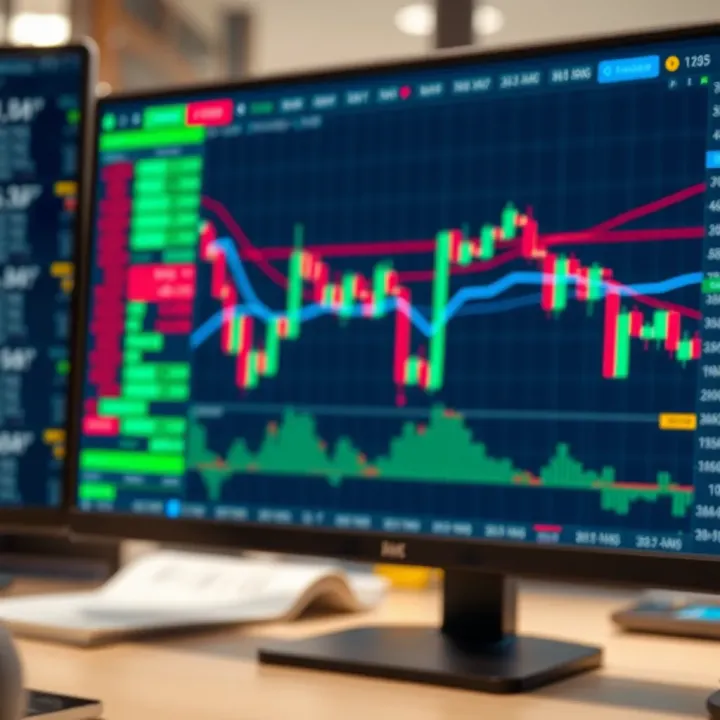
📊 Master forex trading indicators to spot market trends and make smart choices. Tailored guidance for South African traders ready to navigate currency swings confidently.
Based on 13 reviews